Why Anthropic Is Suing the Pentagon: The Full Story (2026)
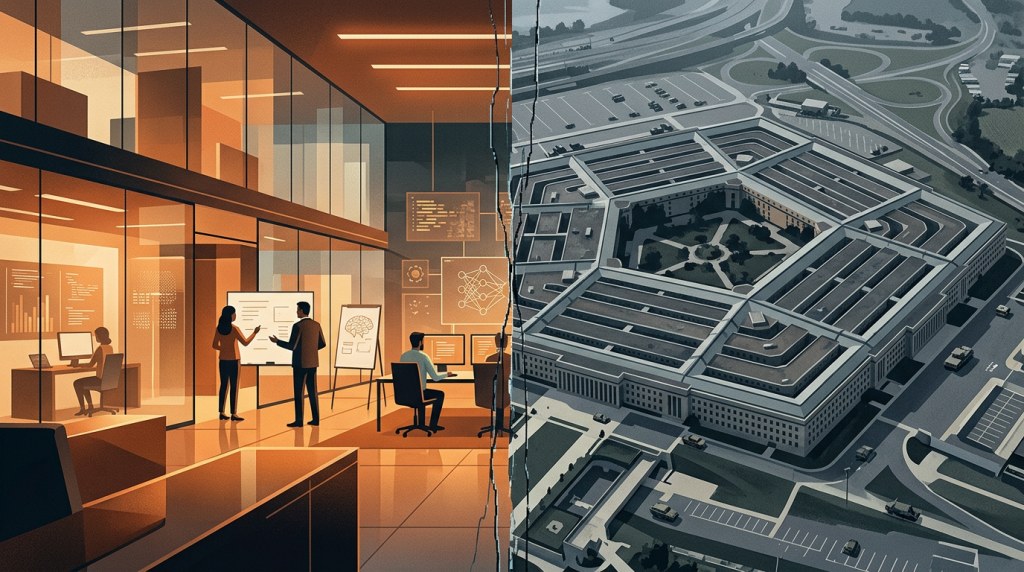
The U.S. Defense Department has done something it has never done before: it designated an American company a national security supply chain risk. That company is Anthropic — the AI safety startup behind Claude — and its CEO Dario Amodei has vowed to challenge the move in court. The dispute centers on a single, explosive question: should an AI company be able to restrict how the military uses its technology?
What Happened: A Timeline of Events
To understand why Anthropic is heading to court, you need to follow the chain of events that unfolded over the last two weeks of February and the first week of March 2026.
Late February 2026 — Negotiations Break Down
For several months, the Pentagon had been in active contract negotiations with leading U.S. AI companies, including Anthropic, OpenAI, and Elon Musk’s xAI. The goal: secure broad, classified access to their AI models under terms that would allow military use for “any lawful purpose.” Anthropic was already the only AI company whose services were cleared for use on the Defense Department’s classified networks — a significant competitive advantage.
The sticking point was Anthropic’s position on two narrow but firm restrictions. CEO Dario Amodei insisted the Pentagon commit to not using Claude for mass domestic surveillance or to power fully autonomous lethal weapons systems. The Pentagon refused to accept those carve-outs.
February 28, 2026 — Hegseth Strikes First
Just before a 5 p.m. ET deadline set by Defense Secretary Pete Hegseth, the talks collapsed. Hegseth posted on X announcing his intent to designate Anthropic a “supply chain risk” under the authority granted to the Pentagon to manage foreign threats — a law never before applied to a domestic U.S. company. He wrote that Anthropic had “delivered a master class in arrogance and betrayal” and gave the company six months to facilitate a transition away from its systems.
Within hours, OpenAI CEO Sam Altman announced that his company had reached a new deal with the Pentagon to use its models on classified networks — effectively stepping into the vacuum Anthropic left behind. Elon Musk’s xAI and its Grok AI systems also secured clearance to operate on classified networks that same week.
March 5–6, 2026 — The Designation Becomes Official
On March 5, Anthropic confirmed it had received formal written notification from the Pentagon. The supply chain risk label was effective immediately. Under its terms, the Pentagon and all its contractors were required to cease using Anthropic’s Claude for any defense-related work. President Trump wrote on Truth Social that most federal agencies must immediately stop using Anthropic’s AI, while giving the Pentagon a six-month wind-down period.
Amodei responded that same evening with a lengthy statement. He apologized for the tone of a private internal memo — leaked to The Information — in which he had written that the Trump administration resented Anthropic because he hadn’t “given dictator-style praise to Trump.” That memo, he said, had been written “six days ago” in a moment of frustration and did not reflect his considered views. Then, in the same statement, he confirmed Anthropic would sue: “We do not believe this action is legally sound, and we see no choice but to challenge it in court.”
March 7–8, 2026 — The Legal Challenge Takes Shape
Amodei confirmed the lawsuit intention in a CBS News interview. He said Anthropic would wait until the company received a more formal legal document before filing, but left no ambiguity about the outcome: the designation would be challenged. Undersecretary of Defense Emil Michael posted on X that there were “no active negotiations” with Anthropic, signaling the Pentagon has no intention of reversing course voluntarily.
Anthropic vs. OpenAI: Side-by-Side on the Pentagon Deal
| Factor | Anthropic (Claude) | OpenAI (ChatGPT) |
|---|---|---|
| Pentagon deal status | Blacklisted — supply chain risk designation | New deal signed; cleared for classified networks |
| CEO’s public stance | Amodei: refused unrestricted military use | Altman: “We don’t get to choose how the military uses it” |
| Autonomous weapons restriction | Yes — a firm red line | No restriction accepted |
| Mass surveillance restriction | Yes — a firm red line | No restriction accepted |
| App Store rank (early March 2026) | #1 (surged during boycott of ChatGPT) | Dropped from #1 amid boycott |
| Classified network access | Revoked (pending six-month transition) | Newly granted |
| Legal action | Lawsuit filed / pending against Pentagon | None |
| Microsoft stance | Microsoft confirmed it will continue offering Claude via M365, GitHub, and AI Foundry for non-defense work | Existing partner |
Why Anthropic Is Suing the Pentagon
The legal challenge rests on a straightforward argument: the Pentagon applied the wrong tool to the wrong target, and the application is not legally sound.
The Supply Chain Risk Designation Was Built for Foreign Adversaries
The statutory authority Hegseth used — which allows the Pentagon to designate entities as supply chain risks — was designed to handle companies with ties to foreign adversaries. Huawei (China) and Kaspersky (Russia) are the textbook cases. Anthropic is a San Francisco-based company with no such ties. As Amodei noted, the label has “never before publicly applied to an American company.” Multiple legal observers quoted in news coverage have said the designation is unlikely to survive court scrutiny and appeared designed more to signal consequences to other AI companies than to actually disqualify Anthropic on legitimate national security grounds.
The Scope Dispute
Anthropic also disputes the Pentagon’s interpretation of the ban’s reach. The Defense Department’s position is that the supply chain risk designation prohibits any company holding a defense contract from using Anthropic’s services — full stop. Anthropic argues the designation, read legally, only restricts Claude’s use when it is being used directly as part of work performed under Department of Defense contracts. The distinction matters enormously: Anthropic projected approximately $14 billion in revenue for 2026, and the vast majority of that comes from commercial enterprise customers — many of whom also hold some form of defense contract. If the Pentagon’s broad interpretation stands, Anthropic’s total addressable market could be severely constrained. Microsoft, which offers Claude through Microsoft 365, GitHub Copilot, and its AI Foundry platform, sided with Anthropic’s narrower reading and confirmed it would continue the partnership.
The Precedent Risk
Beyond the money, Anthropic is fighting over precedent. If the Pentagon can effectively blacklist a U.S. company by misapplying a foreign-threat designation whenever that company declines to remove safety guardrails, it creates a chilling effect across the entire AI industry. An influential tech advocacy group whose members include Nvidia and Apple wrote to Hegseth urging him not to apply the label, citing the dangerous precedent it would set for investment in American AI. The Congressional reaction has been similarly mixed, with some members trying to de-escalate the dispute before it became official.
What This Means for the AI Industry
The Anthropic-Pentagon dispute is not a niche corporate lawsuit. It is one of the most consequential policy battles in AI so far, with implications that will ripple across the industry for years.
AI Safety vs. Government Demands
Anthropic was founded in 2021 by Dario Amodei and other former OpenAI researchers who were concerned about the pace of AI development outrunning safety practices. The company’s “responsible scaling policy” is central to its identity and its investor pitch. By refusing to remove restrictions on autonomous weapons and mass surveillance use, Amodei was, in effect, putting the company’s safety commitments above a lucrative government contract. Whether that principle holds up in court — and in the market — will define the template for how other AI companies navigate government pressure.
The Government as Kingmaker
The episode also reveals how much power the U.S. government now holds over the commercial AI industry. Anthropic’s Pentagon contract was worth up to $200 million. But the secondary risk — having the “supply chain risk” label attached to your company — is potentially far more costly. Defense contractors, financial institutions, and other regulated industries that do business with the government may hesitate to use Claude even for entirely commercial purposes if the label signals government disapproval. This is precisely the coercive leverage the designation provides, and it is the leverage Hegseth used.
Investment Uncertainty
Anthropic was most recently valued at approximately $380 billion, with more than 500 enterprise customers paying over $1 million annually. The lawsuit, the public fight with the Trump administration, and the uncertainty over the ban’s scope all introduce real business risk into that valuation. Investors in AI companies are now watching closely to see how the court proceedings unfold.
Anthropic vs. OpenAI: A Deepening Divide
The Pentagon dispute has widened what was already a significant philosophical gap between the two leading U.S. AI labs.
OpenAI CEO Sam Altman signed a deal with the Pentagon and then faced a tense internal all-hands meeting in which he acknowledged that OpenAI “doesn’t get to choose” how the military uses its AI products. The meeting was described as painful, with employee concerns about autonomous weapons use going essentially unanswered in terms of structural guardrails. Altman’s message, essentially: the military’s operational decisions are the military’s to make.
Amodei’s message was the opposite. The restrictions on autonomous lethal weapons and mass surveillance were non-negotiable — not because Anthropic doesn’t want government business, but because the company believes certain uses cross an ethical line its technology should not enable. That position cost Anthropic its classified-network clearance. It also made Claude the most downloaded free app on the U.S. App Store, as a wave of users — many citing the OpenAI-Pentagon deal as the reason — switched from ChatGPT to Claude in a visible act of consumer protest.
It is worth noting the personal history here. Amodei left OpenAI in 2021, partly due to disagreements over AI safety practices. Altman was temporarily removed by his own board in 2023 amid questions about transparency. These are two companies that share technical roots but have grown into genuinely different organizations with genuinely different risk philosophies. The Pentagon dispute has forced both of those philosophies into the open. For a deeper look at how Claude performs as an actual product, see our Claude Sonnet 4.6 review.
What Happens Next
Several scenarios are possible as the dispute moves toward legal resolution.
Scenario 1: Anthropic Wins in Court
Most legal observers quoted in reporting have suggested the supply chain risk designation, as applied to a U.S. company with no foreign adversary ties, has a weak legal foundation. If a federal court agrees, the designation could be struck down or significantly narrowed — restoring Anthropic’s ability to work with defense contractors and potentially reopening negotiations with the Pentagon itself. This is probably the outcome Anthropic is betting on.
Scenario 2: Political Settlement
Despite the hard rhetoric from Hegseth and the Pentagon, there is a practical problem with the hard-line position: Claude is embedded in a significant amount of infrastructure that the military and defense contractors actually rely on. A six-month transition window suggests even Hegseth recognizes a cold-turkey break is disruptive. A negotiated settlement — one in which Anthropic agrees to modified language around its usage restrictions while the Pentagon quietly softens its formal designation — remains possible, particularly if the lawsuit gathers momentum.
Scenario 3: The Designation Stands and Sticks
If the courts uphold the Pentagon’s authority to apply this designation and Anthropic loses the legal challenge, the consequences are severe. The company would be locked out of the defense contracting ecosystem entirely, and other government agencies following Trump’s directive would also be off-limits. The business impact would depend heavily on how much of Anthropic’s commercial revenue is tied to companies with defense contracts — the very question Anthropic and the Pentagon are disputing.
The Broader Rulemaking Question
Regardless of how the litigation resolves, this dispute is going to push Congress and the courts to address a question that has not yet been answered clearly: do AI companies have the right to impose ethical use restrictions in their contracts with the U.S. government, and if so, what is the government’s recourse when it disagrees?
Frequently Asked Questions
What is the Anthropic Pentagon lawsuit about?
Anthropic is challenging the U.S. Defense Department’s decision to designate it a “supply chain risk to national security.” The designation effectively bans Anthropic’s Claude AI from being used in any defense-related work and bars defense contractors from using Anthropic’s services. Anthropic argues the designation is legally unsound — the law it was applied under was designed for companies with foreign adversary ties, not U.S. companies — and has vowed to challenge it in federal court.
Why did the Pentagon ban Anthropic?
The Pentagon wanted unrestricted access to Claude for “any lawful purpose,” including potential use in autonomous weapons and mass surveillance applications. Anthropic’s CEO Dario Amodei refused to remove restrictions on those two specific use cases. Defense Secretary Pete Hegseth responded by designating Anthropic a national security supply chain risk — a move typically reserved for companies tied to foreign adversaries such as China or Russia.
What is a “supply chain risk” designation and why is it unusual here?
The supply chain risk designation is a Pentagon authority typically used against companies linked to foreign adversaries — for example, Huawei (China) or Kaspersky (Russia). It had never before been publicly applied to an American-owned company. Anthropic and multiple legal experts argue the designation is being misused and will not survive judicial review.
Does the ban affect all Anthropic customers?
This is the central dispute. The Pentagon argues the ban applies to any company that holds a defense contract, for all uses of Claude. Anthropic argues the designation only restricts Claude’s use when it is being used directly as part of work performed under a Department of Defense contract. Microsoft, which offers Claude through M365, GitHub, and Azure AI Foundry, sided with Anthropic’s narrower reading and said it will continue offering Claude to its customers for non-defense work.
Why did Claude hit #1 on the App Store?
A consumer backlash against OpenAI’s decision to sign an unrestricted Pentagon deal drove a wave of users to switch from ChatGPT to Claude. Hashtags encouraging users to cancel ChatGPT spread across Reddit and X, and Claude surged to the number one position on both the U.S. Apple App Store and Google Play Store in early March 2026. The boycott was a rare case of AI product choice becoming a direct expression of political values.
What did Sam Altman say about OpenAI’s Pentagon deal?
At an internal all-hands meeting on March 3, 2026, Sam Altman told OpenAI employees that his company “doesn’t get to choose” how the Pentagon uses its AI products. Operational decisions, he said, are the government’s to make. Altman described the employee backlash as “really painful” but stood by the decision to sign the deal, warning that competitors — including Musk’s xAI — would simply fill the void if OpenAI walked away.
Will Anthropic’s lawsuit succeed?
Most legal observers have suggested the supply chain risk designation, as applied to an American company with no foreign adversary ties, sits on weak legal ground and appears designed more to coerce compliance from the AI industry than to address a genuine national security threat. However, courts give significant deference to executive branch decisions on national security matters, so the outcome is not guaranteed. The case could also be resolved through negotiation before a final ruling.
Can I still use Claude if I work for a government contractor?
According to Anthropic’s interpretation of the designation, yes — as long as you are using Claude for work that is not directly part of a Defense Department contract. Microsoft has confirmed the same interpretation and says it will continue offering Claude through its platforms for non-defense use. However, given the legal uncertainty and the ongoing litigation, companies in the defense contracting space should consult their legal teams before relying on this interpretation.