Sawyer Ruhl

Sawyer Ruhl is a technology analyst and the founder of ComputerTech.co, where he provides hands-on reviews of AI tools after extensive real-world testing. With a background in industrial engineering and daily use of AI across professional workflows, he focuses on practical performance over marketing hype.

OpenClaw for Solopreneurs: How One Person Can Run an AI-Powered Business Stack (2026)

You’re running a business by yourself. There’s nobody to hand things off to, nobody to cover when you’re unavailable, and nobody to remind you that you forgot to post on LinkedIn this week — again. That’s the solopreneur reality, and it’s why most solo operators spend more time on operational busywork than on the actual […]

OpenClaw for Solopreneurs: How One Person Can Run an AI-Powered Business Stack (2026) Read More »
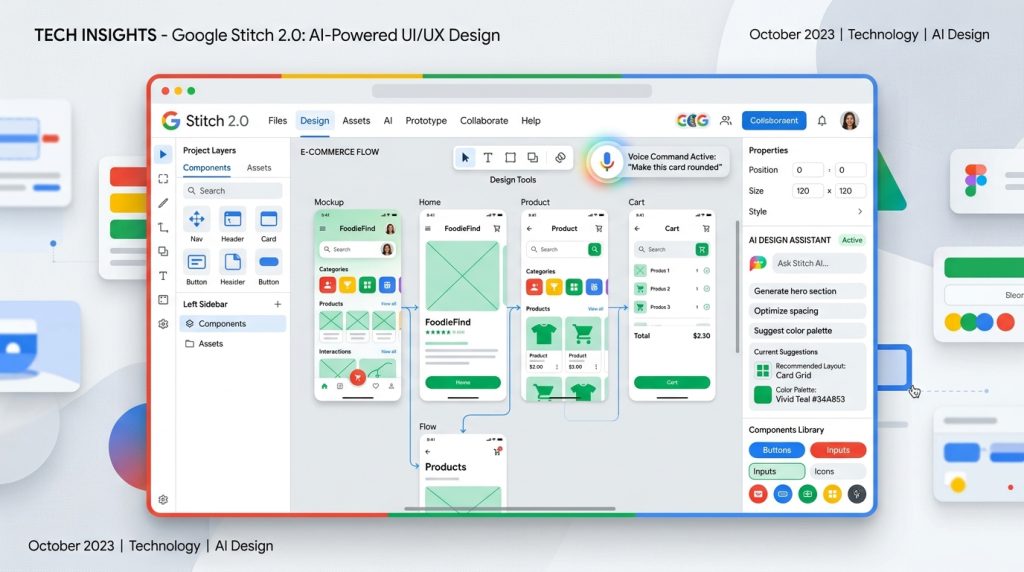
Google Stitch 2.0 Review 2026: Google Labs’ Free AI UI Builder That Turns Sketches Into Prototypes

When Google released Stitch 2.0 on March 17, 2026, Figma’s stock dropped the same day — not because Stitch is better than Figma, but because it signals where the entire design industry is heading, and Google just made it free. Four days in, the “vibe design” framing is already everywhere, but almost nobody is talking

Google Stitch 2.0 Review 2026: Google Labs’ Free AI UI Builder That Turns Sketches Into Prototypes Read More »

GPT-5.4 Mini & Nano Review 2026: OpenAI’s Most Capable Small Models Yet (2X Faster, Near-Flagship Performance)

GPT-5.4 Mini & Nano Review 2026: OpenAI’s Most Capable Small Models Yet (2X Faster, Near-Flagship Performance) On March 17, 2026, OpenAI quietly released two models that could reshape how developers deploy AI at scale: GPT-5.4 mini and GPT-5.4 nano. While everyone’s been fixated on the race for bigger, more powerful models, OpenAI just proved that

GPT-5.4 Mini & Nano Review 2026: OpenAI’s Most Capable Small Models Yet (2X Faster, Near-Flagship Performance) Read More »

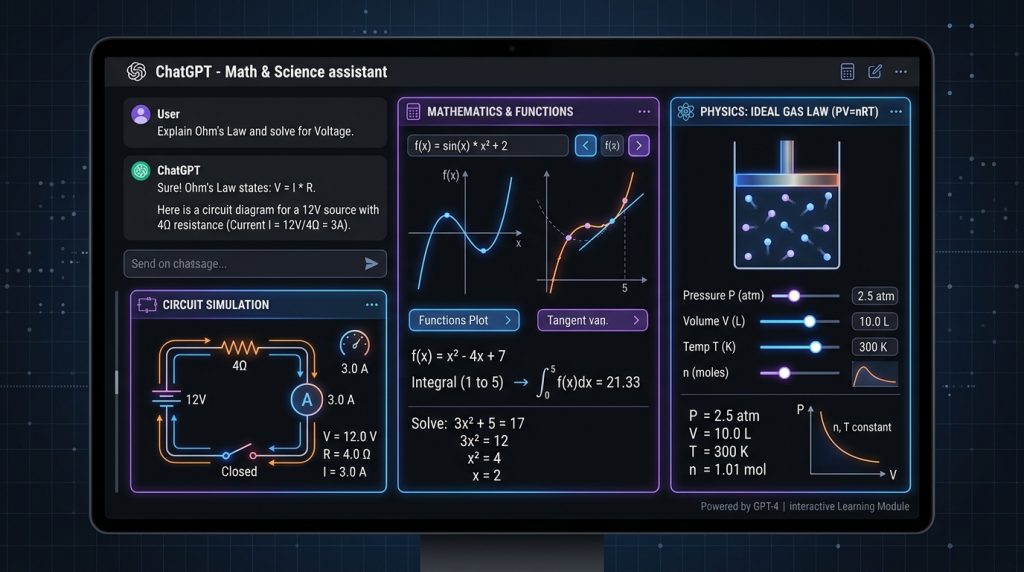
ChatGPT Math & Science Tools Review 2026: OpenAI’s Most Useful Upgrade Yet

On March 10, 2026, OpenAI quietly shipped the upgrade every STEM student has wanted for years: interactive math and science tools baked directly into ChatGPT. No more bouncing between ChatGPT for explanations, Desmos for graphs, and Wolfram Alpha for computations. For the first time, you can manipulate variables in real-time, watch equations update live, and

ChatGPT Math & Science Tools Review 2026: OpenAI’s Most Useful Upgrade Yet Read More »

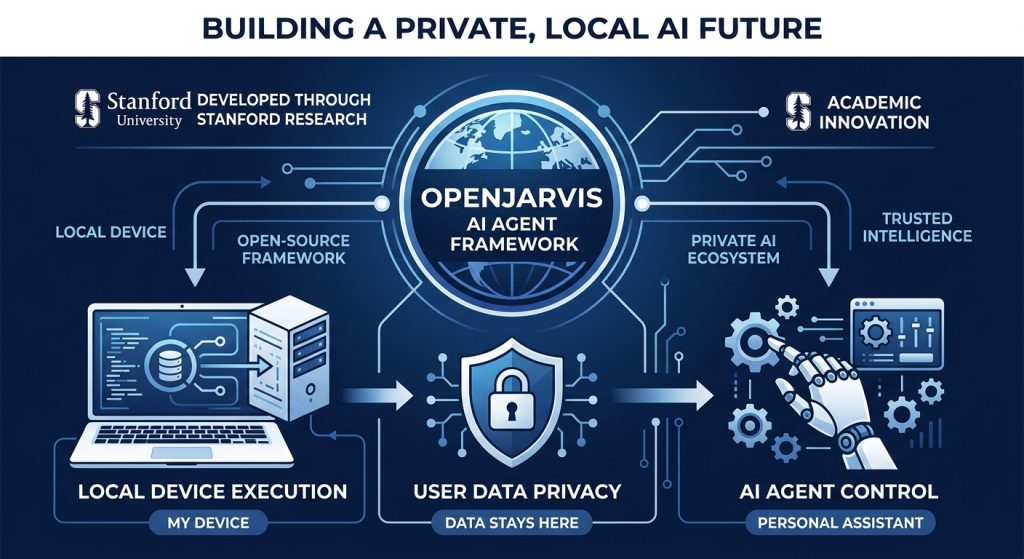
OpenJarvis Review 2026: Stanford’s Local-First AI Agent Framework

On March 12, 2026, Stanford’s Scaling Intelligence Lab dropped something the AI agent ecosystem has been quietly missing: a framework built around the uncomfortable truth that “personal AI” running entirely on someone else’s servers isn’t actually personal. OpenJarvis isn’t just another agent framework — it’s Stanford’s answer to a specific research finding that local models

OpenJarvis Review 2026: Stanford’s Local-First AI Agent Framework Read More »

GLM-5-Turbo Review 2026

When Z.ai announced GLM-5-Turbo on March 16, 2026, the headline was “faster and cheaper” — but the number that actually matters is buried in OpenRouter’s provider telemetry: a 0.67% tool call error rate. Compare that to the base GLM-5 endpoints, where error rates run from 2.33% to 6.41%, and you start to understand why Z.ai

GLM-5-Turbo Review 2026 Read More »

Mistral Small 4 review 2026

Mistral Small 4 Review 2026: The First MoE Model That Does It All

Mistral just made the “which model do I deploy?” question obsolete — at least for their product line. Mistral Small 4, released March 16, 2026, is a 119B-parameter Mixture-of-Experts model that collapses four previously separate products (Mistral Small, Magistral, Pixtral, and Devstral) into a single deployment target with configurable reasoning effort. The kicker: it’s fully

Mistral Small 4 Review 2026: The First MoE Model That Does It All Read More »