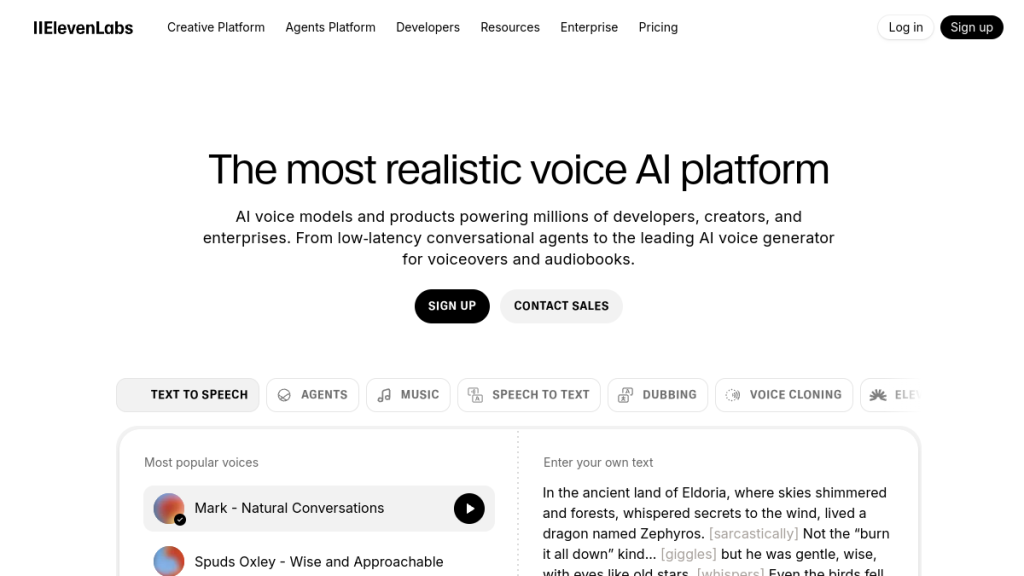
On March 26, 2026, Mistral AI released Voxtral TTS, an open-source text-to-speech model that claims to outperform ElevenLabs Flash v2.5 in human evaluations. In blind listening tests, Voxtral achieved a 62.8% preference rate against ElevenLabs Flash on flagship voices and an impressive 69.9% preference rate on voice customization tasks – making this the first open-source TTS model to credibly challenge the quality leader in enterprise voice AI.
Rating: 8.5/10 ?????????
What Is Mistral Voxtral TTS?
Mistral Voxtral TTS is a 4-billion-parameter open-source text-to-speech model that generates human-like speech in 9 languages with zero-shot voice cloning capability. Unlike proprietary competitors like ElevenLabs or OpenAI TTS that require API calls and ongoing subscription costs, Voxtral provides downloadable model weights that enterprises can run on their own hardware – including smartphones and laptops.
The key differentiator is ownership versus rental: while every major TTS provider operates an API-first business model where companies rent voice capabilities, Mistral gives enterprises the full model to deploy locally, modify, and scale without sending sensitive audio data to third parties.
The Benchmark Story: First Open Model to Beat ElevenLabs
Mistral’s internal human evaluation study represents the most comprehensive competitive analysis in TTS since ElevenLabs dominated the market. Using native speakers across all 9 supported languages, three annotators performed side-by-side preference tests measuring naturalness, accent adherence, and acoustic similarity.
| Comparison Category | Voxtral TTS Win Rate | Testing Methodology |
|---|---|---|
| Flagship Voices vs ElevenLabs Flash v2.5 | 62.8% | Native speakers, 9 languages |
| Voice Customization vs ElevenLabs Flash v2.5 | 69.9% | Zero-shot custom voice cloning |
| Emotional Expressiveness vs ElevenLabs v3 | At parity | Emotion-steering evaluation |
| Latency Performance | 90ms time-to-first-audio | Similar to ElevenLabs Flash |
Source: Mistral AI internal evaluation, March 2026
Pricing
| Provider | Model/Tier | Cost per 1K Characters | Monthly Plans | Open Source |
|---|---|---|---|---|
| Mistral Voxtral TTS | API | $0.016 | Pay-as-you-go | ? Yes (CC BY NC 4.0) |
| ElevenLabs | Starter | ~$0.17 | $5/mo (30k chars) | ? No |
| ElevenLabs | Creator | ~$0.22 | $22/mo (100k chars) | ? No |
| OpenAI TTS | Standard (tts-1) | $0.015 | Pay-as-you-go | ? No |
| OpenAI TTS | HD (tts-1-hd) | $0.030 | Pay-as-you-go | ? No |
| Google Cloud TTS | Standard | $0.004 | Pay-as-you-go | ? No |
| Google Cloud TTS | WaveNet/Neural2 | $0.016 | Pay-as-you-go | ? No |
| Fish Audio S2 | API | ~$0.05/minute | $11-$75/mo | ? Yes |
Key Features
Zero-Shot Voice Cloning in 3 Seconds: Voxtral can adapt to any voice using just 3 seconds of reference audio, capturing not just vocal characteristics but personality traits like natural pauses, rhythm, and emotional range. Unlike traditional voice cloning that requires extensive training data, this works immediately with minimal input.
Cross-Lingual Voice Adaptation: The model demonstrates zero-shot cross-lingual capabilities without explicit training. You can provide a 10-second French voice sample, input German text, and generate German speech that maintains the French speaker’s accent and vocal characteristics – useful for multinational customer support or dubbing applications.
Edge Deployment at 3GB RAM: When quantized for inference, Voxtral requires only 3GB of memory and runs at 6x real-time speed on consumer hardware. This enables on-device deployment for privacy-sensitive applications where sending audio to cloud APIs is prohibited.
Enterprise-Grade Latency: With 90ms time-to-first-audio and real-time factor of 9.7x, Voxtral meets the latency requirements for interactive voice agents. The model can generate up to 2 minutes of continuous audio natively, with API support for arbitrarily long generations through smart interleaving.
Nine-Language Multilingual Support: Native support for English, French, German, Spanish, Dutch, Portuguese, Italian, Hindi, and Arabic, with cultural nuance recognition for different dialects (French in Paris vs. Montreal, for example).
Emotional Expression Control: The model interprets contextual cues from text to generate appropriate emotional tone – neutral, happy, sarcastic – without requiring explicit markup or additional parameters.
Who Is It For / Who Should Look Elsewhere
Use Voxtral TTS if you:
- Need enterprise-grade voice AI with data sovereignty requirements
- Want to avoid ongoing API costs for high-volume applications
- Require multilingual voice agents with accent preservation
- Build applications in regulated industries (healthcare, finance, government)
- Need customizable voice personalities for brand consistency
- Want to deploy voice AI on edge devices or local infrastructure
Look elsewhere if you:
- Need the absolute highest quality English voices for premium content (ElevenLabs v3 still leads)
- Require extensive emotion markup and granular voice control (Fish Audio S2)
- Want simple plug-and-play without model deployment complexity
- Need voice synthesis in languages beyond the 9 currently supported
- Prefer established enterprise support and SLAs from major cloud providers
Comparison Table
| Feature | Mistral Voxtral TTS | ElevenLabs | OpenAI TTS | Google Cloud TTS | Fish Audio S2 |
|---|---|---|---|---|---|
| Languages | 9 languages | 29 languages | 13+ languages | 75+ languages | 80+ languages |
| Voice Cloning | 3-second zero-shot | 1-minute instant | No custom voices | No voice cloning | Zero-shot with tags |
| Open Source | ? Yes | ? No | ? No | ? No | ? Yes |
| Edge Deployment | ? 3GB RAM | ? Cloud only | ? Cloud only | ? Cloud only | ? GPU required |
| Latency (TTFA) | 90ms | ~100ms (Flash) | ~200ms | ~150ms | 100ms |
| Cost Model | API + Self-hosted | Subscription tiers | Pay-per-use | Pay-per-use | API + Self-hosted |
| Enterprise Focus | ? Data sovereignty | ? Premium quality | ? Reliability | ? Scale & integration | ? Fine control |
| Best For | Owned voice stack | Premium content | Simple integration | Enterprise scale | Creative control |
Controversy / What They Don’t Advertise
Limited Language Coverage: Despite supporting 9 languages, Voxtral significantly trails competitors like Google Cloud TTS (75+ languages) and Fish Audio S2 (80+ languages). For global enterprises, this could be a dealbreaker for markets like Japanese, Korean, or African languages.
CC BY NC 4.0 License Restrictions: The “Non-Commercial” clause in Mistral’s license could pose problems for enterprise use. While Mistral offers commercial licensing, the open-source version technically prohibits commercial deployment – creating confusion about when enterprises need to pay.
GPU Requirements for Optimal Performance: While Mistral claims smartphone compatibility, achieving the advertised 6x real-time speed requires significant computational resources. On older hardware, performance degrades to barely real-time, limiting practical edge deployment scenarios.
Limited Emotion Control: Unlike Fish Audio S2’s granular tag-based emotion control ([whisper], [angry], etc.), Voxtral relies on contextual interpretation from text. This makes precise emotional steering difficult for applications requiring specific tone control.
Evaluation Methodology Questions: Mistral’s human evaluation study, while comprehensive, was conducted internally without third-party validation. The 69.9% preference rate against ElevenLabs Flash v2.5 (not v3) may not reflect real-world performance against the latest ElevenLabs models.
Pros and Cons
Pros
- True data sovereignty: Deploy locally without sending audio to third-party APIs
- Cost-effective at scale: No ongoing API charges after initial deployment
- Exceptional voice cloning: 3-second adaptation with personality preservation
- Cross-lingual capabilities: Maintain speaker identity across languages
- Enterprise-grade latency: 90ms time-to-first-audio for real-time applications
- Competitive quality: Beats ElevenLabs Flash in human evaluations
Cons
- Limited language support: Only 9 languages vs. competitors’ 75+
- License ambiguity: CC BY NC 4.0 may restrict commercial use
- Hardware requirements: Performance varies significantly across devices
- Emotion control limitations: Less granular than tag-based systems
- New model risks: No long-term performance data or enterprise track record
Getting Started
Step 1: Test Voxtral TTS in Mistral Studio using preset voices or your own 3-second voice sample.
Step 2: Sign up for Mistral API access at $0.016 per 1K characters for production testing.
Step 3: Download open weights from Hugging Face for self-hosting evaluation (requires CC BY NC 4.0 license compliance).
Step 4: Integrate using Mistral’s official documentation and Python SDK for voice customization workflows.
Step 5: Contact Mistral for commercial licensing if deploying in production environments requiring data sovereignty.
Final Verdict
Mistral Voxtral TTS represents a pivotal moment in enterprise voice AI – the first open-source model to credibly challenge ElevenLabs’ quality leadership while offering something proprietary competitors cannot: complete ownership of the voice stack. For enterprises operating in regulated industries, managing sensitive customer data, or seeking to avoid vendor lock-in, Voxtral provides a compelling alternative to rental-based voice services.
The model’s technical achievements are impressive: 69.9% human preference over ElevenLabs Flash in voice customization, 90ms latency for real-time applications, and 3-second voice cloning with personality preservation. Combined with cross-lingual capabilities and edge deployment options, these features address genuine enterprise pain points that cloud-based competitors cannot solve.
Buy Voxtral TTS today if you’re building voice agents for enterprise applications requiring data sovereignty, multilingual support with accent preservation, or cost-effective scaling beyond API limitations. The combination of competitive quality and ownership economics makes it ideal for voice-heavy applications in customer support, training, or internal communications.
Wait for broader language support if your applications require coverage beyond the current 9 languages, need the absolute highest quality English voices for premium content, or require extensive emotion control for creative applications. ElevenLabs v3 and Fish Audio S2 remain superior for these specific use cases.