AI music generation has exploded from a gimmick into a genuine creative force. With Google launching Lyria 3 in February 2026, competitor Riffusion shutting its doors, and major record labels scrambling to figure out licensing — the AI music space is moving fast.
At the center of it all sits Suno, the Cambridge-based startup valued at $2.45 billion that lets anyone create full songs — vocals, instrumentals, and all — from a text prompt. But is it actually good? And more importantly, is it worth paying for?
We dug into Suno’s features, pricing, user reviews, legal battles, and the Warner Music deal to give you the full picture. Here’s what we found.
What Is Suno AI?
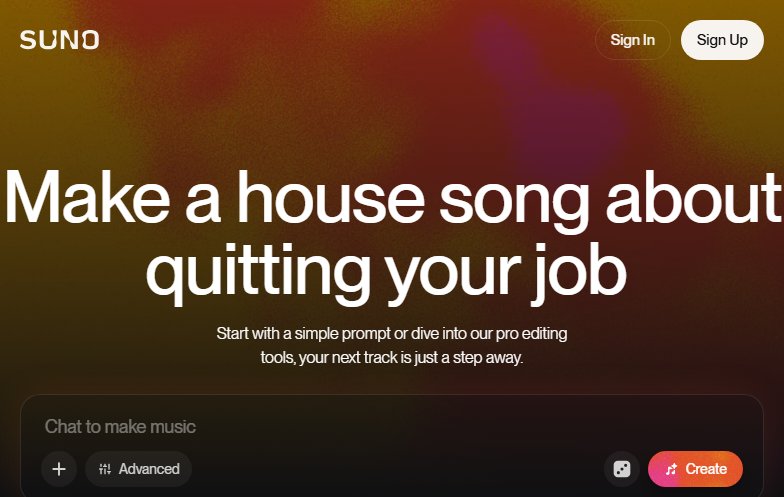
Suno is a generative AI music creation platform that produces complete songs from text prompts. You describe what you want — genre, mood, tempo, lyrics — and Suno generates a full track with vocals, instrumentation, and production. Think of it as ChatGPT, but for music.
The platform was built by Suno, Inc., founded in 2023 by Michael Shulman, Georg Kucsko, Martin Camacho, and Keenan Freyberg — all former employees of Kensho, an AI analytics company acquired by S&P Global. The company is headquartered in Cambridge, Massachusetts, with additional offices in New York City and Los Angeles.
Suno first launched publicly on December 20, 2023, alongside a partnership with Microsoft that integrated it as a plugin for Microsoft Copilot. According to Rolling Stone, it was positioned as “a ChatGPT for music” from day one.
Since then, Suno has raised $250 million in Series C funding at a $2.45 billion valuation (November 2025), settled a major lawsuit with Warner Music Group, launched a mobile app, and iterated through multiple model versions — currently on v5, released September 2025.
Key Features: What Can Suno Actually Do?
Suno has evolved well beyond simple text-to-music generation. Here’s what the platform offers as of February 2026:
Text-to-Song Generation
The core feature. Type a description — something like “upbeat indie folk song about road trips, male vocals, acoustic guitar and harmonica” — and Suno generates a complete song. You can also write your own lyrics or let the AI handle everything. Songs can be up to several minutes long, and each generation produces two variations to choose from.
Model Versions (v4, v4.5, v5)
According to Suno’s pricing page, their model lineup includes:
- v4.5-all — Available to free users. Decent quality but noticeably behind paid tiers.
- v4, v4.5, v4.5+ — Available on Pro and Premier plans.
- v5 — Their most advanced model, launched September 2025. Available only on paid plans. According to community feedback on Reddit’s r/SunoAI, v5 represented a significant quality jump in vocal clarity, genre accuracy, and production polish.
Suno Studio
Launched September 25, 2025, Suno Studio is described as “the first-ever generative audio workstation.” It’s available exclusively on the Premier plan and adds features like:
- Warp Markers — Adjust timing at specific points in a track
- Remove FX — Strip effects from generated audio
- Alternates — Generate alternative takes for specific sections
- Time Signature support — Control the rhythmic structure of your music
Studio 1.2 shipped in February 2026, adding these granular editing capabilities that move Suno closer to a traditional digital audio workstation.
Personas
Available on Pro and Premier plans, Personas let you create and save consistent vocal styles. Instead of getting a random voice each time, you can define a specific vocal character and reuse it across multiple songs — useful for creating a consistent “artist” identity.
Stem Extraction
Paid users can split generated songs into up to 12 separate vocal and instrument stems. This lets you isolate drums, bass, guitars, vocals, and other elements — essential for remixing, further editing in external DAWs, or using Suno’s output as a starting point for more polished productions.
Audio Upload and Remixing
You can upload your own audio — up to 1 minute on the free plan, up to 8 minutes on paid plans — and use it as a starting point. Suno can extend it, add new vocals, layer instrumentals, or create covers in different styles. The platform also supports remixing, extending, and adjusting the speed of existing songs.
Hooks
A newer feature designed for creating short-form musical content — think social media jingles, TikTok sounds, or podcast intros. It’s a separate creation mode with its own interface.
Commercial Use Rights
This is important: only Pro and Premier subscribers get commercial use rights for songs created on the platform. Free plan users cannot use their generated music commercially. According to Suno’s terms of service, paid users can distribute and monetize their songs — several users have reportedly published AI-generated tracks to Spotify, Apple Music, and other streaming platforms.
Suno Pricing Breakdown (February 2026)
Suno offers three tiers, with yearly billing providing a 20% discount. Here’s what each plan includes according to Suno’s pricing page:

Free Plan — $0/month
- 50 credits per day (approximately 10 songs), refreshed daily
- Access to v4.5-all model only
- Standard features (basic creation, crop, fade editing)
- Upload up to 1 minute of audio
- Shared creation queue (slower processing)
- No commercial use rights
- No add-on credit purchases
- 4 concurrent generations in shared queue
Pro Plan — $8/month (billed yearly) or $10/month (monthly)
Marked as “Most Popular” by Suno
- 2,500 credits per month (approximately 500 songs)
- Access to all models including v5
- Standard + Pro features (Personas, advanced editing)
- Stem extraction (up to 12 stems)
- Upload up to 8 minutes of audio
- Add vocals or instrumentals to existing songs
- Priority queue, up to 10 concurrent generations
- Commercial use rights
- Early access to new features
- Add-on credits available for purchase
Premier Plan — $24/month (billed yearly) or $30/month (monthly)
Marked as “Best Value” by Suno
- 10,000 credits per month (approximately 2,000 songs)
- Everything in Pro, plus:
- Access to Suno Studio (generative audio workstation)
- All advanced editing and creation features
Important note: Credits do not carry over between months or days. Purchased add-on credits don’t expire, but require an active subscription to use.
Value Analysis
At $8/month for 500 songs with commercial rights, Suno’s Pro plan is remarkably affordable compared to traditional music production costs. Even hiring a single freelance producer for one track could run $200-500+. The Premier plan at $24/month is worth it primarily for Suno Studio — if you need fine-grained editing control, it’s the only way to get it.
For context, competitor Udio charges similar prices, while other AI tools in different categories often charge $20-50/month for comparable functionality. Suno’s pricing is competitive for the creative AI space.
Honest Pros and Cons
Based on our research across Trustpilot reviews, Reddit’s r/SunoAI community (71,000+ members), and direct analysis of the platform’s features:
Pros
- Genuinely impressive output quality (v5) — According to community feedback, Suno v5 produces music that casual listeners often can’t distinguish from human-made tracks. Genre coverage is broad — pop, rock, hip-hop, jazz, country, electronic, and more. Multiple Reddit users report successfully publishing v5 songs to streaming platforms.
- Lowest barrier to entry in music creation — No musical knowledge, instruments, or production experience required. Type a description, get a song. This democratization is Suno’s core value proposition.
- Generous free tier — 10 songs per day for free is substantial enough to evaluate the platform thoroughly before committing money. Most AI tools gate meaningful usage behind paid plans.
- Affordable paid plans — $8/month for 500 songs with commercial rights is genuinely good value. The per-song cost is negligible compared to any other form of music production.
- Growing creative control — Personas, stem extraction, audio upload, and Suno Studio show the platform is moving beyond “press button, get song” toward real creative tools. Stem extraction alone makes Suno useful as a sketch pad for professional musicians.
- Active development — Regular model updates, Studio 1.2 features, Hooks mode, and ongoing feature additions suggest strong investment in the product.
- Mobile app available — Create songs on the go, which matters for capturing inspiration quickly.
Cons
- Customer support is essentially non-existent — This is the single biggest complaint across every review platform. Trustpilot rates Suno 1.7 out of 5 stars (rated “Bad”), with the AI-generated review summary stating: “A significant number of reviewers mention negative experiences with customer service, describing it as slow, unresponsive, and unhelpful.” Multiple users report billing issues, lost accounts, and vanishing credits with no response from support.
- Credits don’t roll over — If you don’t use your monthly allocation, you lose it. For casual users paying $8/month, this creates pressure to use credits you might not need.
- Free model (v4.5-all) is noticeably weaker — The quality gap between the free model and the v5 model available on paid plans is significant. Free tier users may get a misleading impression of what Suno can do.
- Vocal quality can be hit-or-miss — According to Trustpilot reviewers and Reddit discussions, while v5 is a big improvement, AI vocals still occasionally sound robotic or synthetic, particularly with complex vocal styles. Some users report the AI struggles with syncing vocals to instrumentals in certain genres.
- Unresolved copyright and legal concerns — Suno faced an RIAA lawsuit in June 2024 for training on copyrighted music. The company settled with Warner Music Group for $500 million in November 2025, with WMG gaining oversight of AI-generated content. The training data remains undisclosed. If you plan to use Suno-generated music commercially, this legal ambiguity is worth understanding.
- Loss of creative control in the free plan — Without Personas, advanced editing, or stem extraction, free users are mostly limited to “generate and hope.” Real creative control requires a paid subscription.
- Dependence on a single platform — Your generated songs live on Suno’s servers. Multiple Trustpilot reviewers report losing access to their music libraries after account issues. There’s no bulk export or easy backup system.
Who Is Suno Best For?
Based on its feature set, pricing, and limitations, Suno makes the most sense for these specific user types:
Content Creators and YouTubers
If you need original background music, intros, or jingles for videos, podcasts, or social media — and you don’t want to pay per-track licensing fees — Suno’s Pro plan at $8/month is a bargain. The Hooks feature is specifically designed for short-form content. For more AI tools built for content creators, check out our guide to the best AI tools for YouTubers.
Hobbyist Music Enthusiasts
People who love music but don’t play instruments or produce tracks will find Suno genuinely satisfying. The free tier is generous enough for casual use, and the Pro plan opens up enough creative control to keep it interesting long-term. As one Trustpilot reviewer (a 50+ year musician) put it: Suno has brought “deep satisfaction and emotional fulfillment.”
Songwriters and Lyricists
If you write lyrics but can’t produce music, Suno bridges that gap. Upload your lyrics, choose a style, and hear your words set to music. Several users on Reddit describe using Suno to demo ideas before working with human producers — it’s faster and cheaper than paying for studio time to test concepts.
Game Developers and Filmmakers
Original soundtracks are expensive. Suno’s Premier plan lets you generate 2,000 songs per month with commercial rights and full stems for mixing. For indie developers and filmmakers working on tight budgets, this could replace thousands of dollars in licensing or composer fees.
Who Should Look Elsewhere
Professional musicians looking for production-grade output will still find Suno limiting. While v5 is impressive, it doesn’t replace a skilled producer, and the legal uncertainty around training data may be a dealbreaker for commercial releases at scale. If you need professional AI voice generation specifically (without music), tools like ElevenLabs are more specialized for that purpose.
Suno vs. the Competition: How Does It Compare?
The AI music generation space is evolving rapidly. Here’s how Suno stacks up against the main alternatives:
Suno vs. Udio
Udio is Suno’s closest direct competitor and was also hit by the RIAA lawsuit in June 2024. According to community discussions, Udio tends to produce slightly more “polished” instrumental tracks, while Suno is generally considered stronger at generating complete songs with vocals. Udio has a similar pricing structure. The choice often comes down to personal preference and which model handles your preferred genre better.
Suno vs. Google Lyria 3
Google launched Lyria 3 in February 2026 through DeepMind, offering AI music generation with text-to-music and even image-to-music capabilities. As of launch, Lyria 3 is available through Google’s Gemini platform and YouTube’s Dream Track feature. According to early Reddit discussions, Lyria 3 currently focuses more on instrumentals and may not match Suno’s vocal generation capabilities yet. However, Google’s resources and distribution through Gemini could make it a serious competitor over time. Worth watching.
Suno vs. Riffusion
Notably, competitor Riffusion (operated as “Producer”) is shutting down as of February 19, 2026 — just one day from this article’s publication date. Users are being warned to download their content. This highlights the volatility in this space and the risk of depending on any single AI music platform for long-term storage of your creations.
Suno vs. Traditional Music Production
There’s no real comparison on cost. A single professionally produced track can cost $200-2,000+ depending on complexity. Suno’s Premier plan generates up to 2,000 songs per month for $24. The quality gap is real — Suno can’t replace a skilled human producer for commercial releases — but for drafts, demos, background music, and personal projects, the value proposition is overwhelming.
The Warner Music Deal: What It Means for Users
In November 2025, Suno settled a $500 million lawsuit with Warner Music Group. According to reporting from The Verge, the deal gives WMG oversight of AI-generated content on the platform, and Suno can now train its models on Warner’s music catalog with “opt-in” artist participation.
What this means practically:
- Suno is now distributed and operated through Warner Music Group
- Future models may be trained on a more curated, licensed dataset
- Some Reddit users express concern that this could limit creative variety — “The good stuff will be controlled by Warner exclusively,” one commenter noted
- The deal does provide more legal legitimacy for commercially using Suno-generated music
This is a significant shift. Suno started as an independent startup; it now operates under one of the three major record labels. Whether this helps or hurts the product long-term remains to be seen.
Bottom Line: Is Suno Worth It in 2026?
For most people exploring AI music creation, Suno is the best starting point available today.
The free tier is generous enough to genuinely evaluate the platform. The Pro plan at $8/month is excellent value for content creators, hobbyists, and anyone who needs original music without the cost and complexity of traditional production. The v5 model produces genuinely impressive results across a wide range of genres.
The major caveats are real, though. Customer support is nearly absent — if something goes wrong with your account or billing, expect a frustrating experience. The copyright situation, while improved by the Warner deal, still carries some uncertainty. And credits that don’t roll over punish inconsistent usage patterns.
Our recommendation:
- Start with the free plan to see if AI music generation fits your needs
- Upgrade to Pro ($8/month) if you need commercial rights, the v5 model, or more than 10 songs per day
- Consider Premier ($24/month) only if you specifically need Suno Studio’s workstation features for detailed editing
- Back up your songs regularly — don’t rely on Suno’s servers as your only copy
AI music generation is no longer experimental — it’s a legitimate creative tool. Suno isn’t perfect, but based on our research, it’s the most capable and accessible option in a rapidly evolving space. Just go in with realistic expectations about both the technology’s capabilities and the company’s customer support limitations.
Frequently Asked Questions
Can I use Suno-generated music commercially?
Only if you have a Pro ($8/month) or Premier ($24/month) subscription. Free plan users do not receive commercial use rights. According to Suno’s terms of service, paid subscribers can distribute and monetize their generated music on platforms like Spotify, Apple Music, and YouTube. However, given the ongoing legal discussions around AI-generated music and copyright, it’s worth reviewing the latest terms before major commercial use.
Is Suno AI free to use?
Yes, Suno offers a free plan with 50 credits per day (enough for approximately 10 songs). Free users get access to the v4.5-all model and basic creation features. However, the free plan doesn’t include commercial rights, advanced editing, Personas, or access to the latest v5 model. No credit card is required to sign up.
How does Suno v5 compare to earlier versions?
According to user feedback on Reddit’s r/SunoAI community, v5 (released September 2025) represented a major quality improvement over v4 — particularly in vocal clarity, genre accuracy, production quality, and natural-sounding transitions. v5 is only available on paid plans (Pro and Premier).
Does Suno use copyrighted music for training?
Suno does not publicly disclose its training data. The company faced an RIAA lawsuit in June 2024 alleging training on copyrighted recordings. In November 2025, Suno settled with Warner Music Group for $500 million, gaining licensed access to WMG’s catalog for future training. The exact composition of current training data remains unclear.
Can professional musicians use Suno?
Some do. Producer Timbaland publicly endorsed Suno and reportedly spends 10 hours per day on the platform. Several Reddit users describe using Suno for rapid prototyping — generating rough demos before refining ideas in professional DAWs. The stem extraction feature (up to 12 stems) makes it easier to isolate and rework individual elements. However, most professional musicians view Suno as a creative tool rather than a replacement for traditional production.
What happens to my songs if I cancel my subscription?
This is an area of concern based on user reviews. According to Suno’s platform, your generated songs remain accessible in your library. However, multiple Trustpilot reviewers report losing access to their music after account issues or payment problems. We recommend downloading and backing up any songs you want to keep rather than relying solely on Suno’s servers.
Is Suno better than Udio?
Both platforms are competitive. Based on community discussions, Suno is generally considered stronger for complete songs with vocals, while Udio may edge ahead on instrumental polish in certain genres. Suno’s larger user base, Studio feature, and Warner Music partnership give it advantages in ecosystem and legitimacy. The best approach is to try both — Udio also offers a free tier — and see which produces better results for your specific genre and use case.
Can Google Lyria 3 replace Suno?
Not yet. Google launched Lyria 3 in February 2026 through DeepMind, accessible via Gemini and YouTube’s Dream Track. While Lyria 3 introduces interesting capabilities like image-to-music generation, early reports suggest it’s currently stronger on instrumentals than vocals. Google’s resources make it a long-term competitor, but as of February 2026, Suno remains the more full-featured platform for complete song creation.