Last Updated: February 3, 2026 | Reading Time: 14 min
Choosing an AI writing tool in 2026 isn’t as simple as picking the one with the flashiest marketing. With over 200 options flooding the market—from enterprise platforms to niche tools—making the wrong choice can cost you hundreds of dollars and countless hours.
This comprehensive guide walks you through exactly what to evaluate, what questions to ask, and how to match tools to your specific needs. No fluff, just actionable frameworks you can use today.
Quick Summary: Key Factors to Evaluate
| Factor | Why It Matters | What to Look For |
|---|---|---|
| Use Case Fit | Generic tools waste time | Purpose-built for your content type |
| Output Quality | Poor AI = more editing | Natural language, factual accuracy |
| Pricing Model | Hidden costs add up | Transparent per-word or unlimited plans |
| Learning Curve | Time = money | Intuitive interface, good documentation |
| Integration | Workflow efficiency | Works with your existing tools |
| Context Window | Long-form capability | 50K+ tokens for serious content |
Table of Contents
- Why Choosing the Right Tool Matters
- Step 1: Define Your Use Case
- Step 2: Evaluate Core Features
- Step 3: Assess Output Quality
- Step 4: Consider Pricing Models
- Step 5: Test the Workflow
- Step 6: Check Integration Capabilities
- Red Flags to Avoid
- Decision Framework by Writer Type
- FAQs
- Final Recommendation
Why Choosing the Right Tool Matters {#why-choosing-right-tool-matters}
The difference between the right and wrong AI writing tool isn’t marginal—it’s transformational.
The productivity gap is real:
- Writers using well-matched tools report 2-4x output increases
- Poorly matched tools often get abandoned within 30 days
- The average writer tries 3-4 tools before finding their fit
The cost of wrong choices:
- Annual subscriptions lock you in ($500-2,000/year)
- Learning curves cost time (10-40 hours per tool)
- Switching costs compound (migrating templates, prompts, workflows)
Think of it like this: an AI writing tool is a power tool. A nail gun in the hands of a roofer is transformational. That same nail gun handed to someone doing fine woodworking is useless—or worse, damaging. The tool isn’t bad; it’s mismatched.
Your goal isn’t finding the “best” AI writing tool. It’s finding the best tool for you.
Step 1: Define Your Use Case {#step-1-define-use-case}
Before evaluating any features, get crystal clear on what you’re actually writing.
Primary Content Types
Long-Form Content (Blog posts, articles, guides)
- Requires: Large context windows (50K+ tokens), research integration, outline tools
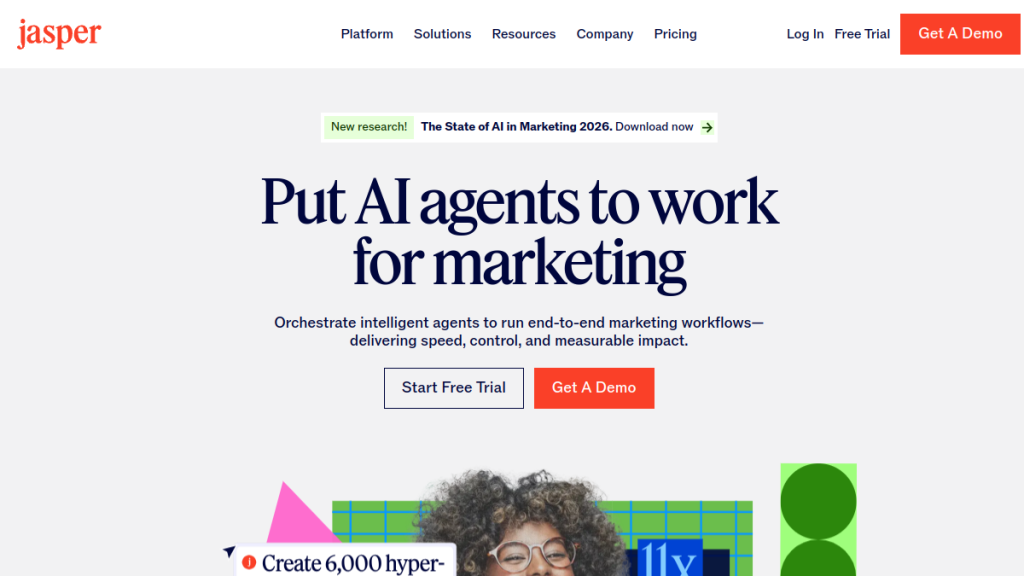
- Best tools: Jasper, Type.ai, Writesonic
- Avoid: Tools focused on short-form (social media generators)
Marketing Copy (Ads, landing pages, emails)
- Requires: Template variety, A/B testing capabilities, brand voice training
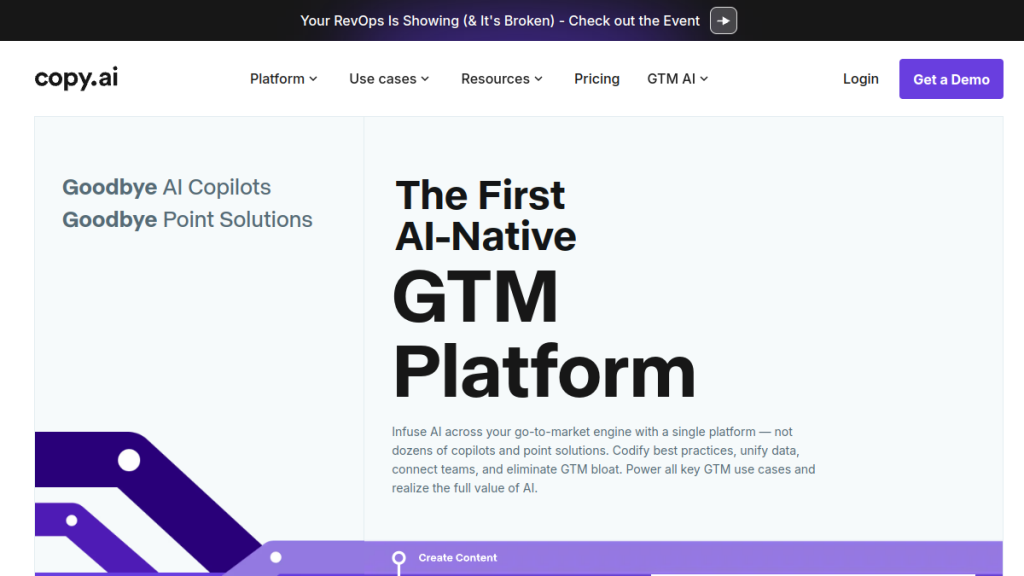
- Best tools: Copy.ai, Jasper, AdCreative.ai
- Avoid: Tools without marketing-specific templates
- Requires: Keyword integration, SERP analysis, content scoring
- Best tools: Surfer SEO, NeuronWriter, Frase
- Avoid: Generic writers without SEO features
Technical/Documentation
- Requires: Accuracy focus, structured output, terminology consistency
- Best tools: Writer.com, Notion AI, specialized technical writers
- Avoid: Creative-focused tools that prioritize flair over precision
Creative Writing (Fiction, scripts)
- Requires: Tone flexibility, character consistency, narrative understanding
- Best tools: Sudowrite, NovelAI, Claude-based tools
- Avoid: Marketing-focused tools with rigid templates
Social Media
- Requires: Platform-specific formatting, hashtag suggestions, brevity
- Best tools: Copy.ai, Buffer AI, Lately
- Avoid: Long-form tools without social templates
Questions to Answer
- What’s your primary content type? (Pick ONE—your tool should excel here)
- What’s your secondary use? (Nice-to-have, not deal-breaker)
- How much do you write monthly? (Affects pricing model choice)
- Do you work solo or with a team? (Affects collaboration needs)
Write these answers down. They’re your evaluation criteria.
Step 2: Evaluate Core Features {#step-2-evaluate-core-features}
Not all features matter equally. Here’s what actually impacts your daily work:
Must-Have Features (Non-Negotiable)
1. Language Model Quality
The underlying AI engine determines output quality more than any other factor.
| Model | Quality Level | Available In |
|---|---|---|
| GPT-4 / GPT-4o | Excellent | ChatGPT, Jasper, Copy.ai |
| Claude 3.5 Opus | Excellent | Claude, Type.ai |
| Proprietary LLMs | Varies | Writesonic, Rytr |
What to test: Give the same prompt to different tools. Compare output quality, accuracy, and naturalness. The gap is often obvious.
2. Context Window Size
This determines how much information the AI can “remember” during a conversation.
- Under 8K tokens: Only suitable for short-form content
- 8K-32K tokens: Adequate for most blog posts
- 32K-100K tokens: Good for long-form and maintaining consistency
- 100K+ tokens: Excellent for books, documentation, maintaining brand voice
Why it matters: Small context windows cause the AI to “forget” earlier instructions mid-article, leading to inconsistent tone and repeated information.
3. Brand Voice Training
The ability to train the AI on your specific style.
- Basic: Choose tone presets (professional, casual, etc.)
- Intermediate: Upload style guides and examples
- Advanced: Fine-tuned models on your existing content
What to look for: Can you upload your own documents? Can you create custom personas? Does it remember preferences across sessions?
4. Output Customization
Control over what the AI produces.
- Adjustable creativity/temperature settings
- Length controls (word count, paragraph limits)
- Format options (bullet points, numbered lists, headers)
- Regeneration and variation capabilities
Nice-to-Have Features
Research Integration
- Real-time web access (fact-checking, current data)
- Source citation capabilities
- Built-in research summaries
Collaboration Tools
- Shared workspaces
- Comment and feedback systems
- Version history
- Role-based permissions
Analytics and Insights
- Readability scores
- SEO optimization suggestions
- Performance predictions
- Content auditing
Step 3: Assess Output Quality {#step-3-assess-output-quality}
This is where most buyers fail. They read marketing claims instead of testing reality.
The 5-Article Test
Before committing to any tool, run this test:
- Generate 5 pieces of content in your primary use case
- Don’t edit them—evaluate raw output
- Score each on:
- Accuracy (facts correct?)
- Naturalness (sounds human?)
- Usefulness (needs light or heavy editing?)
- Consistency (maintains voice throughout?)
Quality Red Flags
Hallucinations
AI “confidently” stating false information. Test by asking about specific dates, statistics, or technical details. Bad tools fabricate freely.
Generic Output
If the content could apply to any company/topic, it’s too generic. Quality tools produce specific, relevant content.
Repetitive Patterns
Watch for repeated phrases, circular logic, or restating the same point. This indicates poor model training.
Unnatural Transitions
“Furthermore,” “Moreover,” “In conclusion”—if every paragraph starts with transition words, the AI is padding.
Loss of Context
For long-form content, check if the conclusion relates to the introduction. Poor tools lose the thread.
Quality Benchmarks by Use Case
| Content Type | Acceptable Quality | Signs of Poor Quality |
|---|---|---|
| Blog Posts | Needs 20-30% editing | Needs 50%+ rewrite |
| Marketing Copy | Ready with minor tweaks | Off-brand, generic |
| SEO Content | Keyword-integrated naturally | Keyword-stuffed |
| Technical Docs | Factually accurate | Contains errors |
Step 4: Consider Pricing Models {#step-4-consider-pricing-models}
Pricing models vary wildly, and the cheapest option often isn’t the best value.
Common Pricing Structures
1. Word/Credit-Based
- Pay per output (words, credits, generations)
- Examples: Jasper (word limits), Copy.ai (credits)
- Best for: Low-volume users, specific projects
- Watch out for: Credits expiring, running out mid-project
2. Unlimited Plans
- Fixed monthly fee, unlimited use
- Examples: Writesonic (some plans), Rytr
- Best for: High-volume content producers
- Watch out for: “Unlimited” often has fair use caps
3. Tiered Feature Access
- Price increases unlock features, not just volume
- Examples: Most enterprise tools
- Best for: Growing teams needing collaboration
- Watch out for: Essential features locked behind expensive tiers
4. Per-Seat Pricing
- Cost multiplied by team members
- Examples: Writer.com, enterprise tools
- Best for: Teams needing consistent access
- Watch out for: Costs balloon with team growth
Calculating True Cost
Annual vs. Monthly
- Most tools offer 20-40% discount for annual billing
- Only commit annually after extensive testing
- Calculate: Monthly price × 12 vs. annual price
Hidden Costs to Factor In
| Hidden Cost | How to Spot | Typical Impact |
|---|---|---|
| Overage charges | Fine print in ToS | 20-100% cost increase |
| Add-on features | Basic plan limitations | $50-200/mo extra |
| Team seats | Per-user pricing | 2-5x base cost |
| API access | Separate pricing | $100-500/mo extra |
| Training time | Your hours × hourly rate | $200-1,000 one-time |
Price-to-Value Framework
Don’t ask “Is this expensive?” Ask “Will this save/make me money?”
Calculation:
Monthly value = (Hours saved × Your hourly rate) + Revenue from additional content
Monthly cost = Subscription + Hidden costs
ROI = (Monthly value - Monthly cost) / Monthly cost
Example:
- Jasper at $49/mo saves 15 hours/month at $50/hr = $750 value
- ROI = ($750 – $49) / $49 = 1,430% return
A $100/month tool that saves 20 hours is better value than a $20/month tool that saves 2 hours.
Step 5: Test the Workflow {#step-5-test-workflow}
Features on paper mean nothing if the actual workflow is clunky.
The Real Workflow Test
Simulate your actual work process:
- Start-to-finish article: Time yourself creating a complete piece
- Revision cycle: How easy is editing and regenerating?
- Template usage: Can you save and reuse prompts efficiently?
- Export process: Getting content out—copy/paste, export, API?
Interface Considerations
Learning Curve
- How long until you’re productive? (Target: under 2 hours)
- Quality of documentation and tutorials
- Community resources (forums, YouTube guides)
Daily Usability
- Number of clicks to generate content
- Keyboard shortcuts
- Mobile access (if needed)
- Load times and reliability
Customization
- Can you create templates?
- Prompt libraries and organization
- Workspace setup flexibility
Workflow Deal-Breakers
- More than 3 clicks to generate: Too much friction
- No prompt saving: You’ll repeat yourself constantly
- Slow generation: Over 30 seconds breaks flow
- Frequent downtime: Check status pages and reviews
Step 6: Check Integration Capabilities {#step-6-integration-capabilities}
Your AI writing tool shouldn’t exist in isolation.
Essential Integrations by Role
Content Marketers:
- WordPress/CMS direct publishing
- SEO tools (Surfer, Semrush, Ahrefs)
- Project management (Notion, Asana, Trello)
- Analytics platforms
Marketing Teams:
- CRM integration (HubSpot, Salesforce)
- Email platforms (Mailchimp, Klaviyo)
- Social schedulers (Buffer, Hootsuite)
- Design tools (Canva, Figma)
Agencies:
- White-label options
- Client workspace separation
- Billing integration
- Reporting tools
Freelancers:
API Access
If you need custom integrations:
- Is API access included or extra cost?
- Rate limits and usage caps
- Documentation quality
- Developer support availability
Red Flags to Avoid {#red-flags-avoid}
These warning signs indicate tools to skip:
Marketing Red Flags
❌ “Write 10x faster!” — Vague claims without specifics
❌ No free trial — They don’t want you to test before paying
❌ Fake reviews — Suspiciously similar 5-star reviews
❌ Feature promises without dates — “Coming soon” features that never arrive
Technical Red Flags
❌ Outdated models — Using GPT-3 or earlier in 2026
❌ No information on training data — Transparency matters
❌ Frequent outages — Check status history
❌ No data privacy policy — Your content may train their models
Business Red Flags
❌ VC-funded with no revenue model — May not survive
❌ No customer support — You’re on your own
❌ Aggressive upselling — Basic features locked
❌ Confusing pricing — Designed to obscure true cost
Decision Framework by Writer Type {#decision-framework-writer-type}
Use this framework to narrow your options:
Freelance Writers
Primary needs: Versatility, cost-effectiveness, quick output
Budget range: $20-60/month
Recommended approach:
- Start with unlimited plans (Writesonic, Rytr)
- Upgrade to Jasper/Copy.ai if volume justifies
- Specialize with niche tools as needed
Top picks: Writesonic (value), Jasper (quality), Copy.ai (marketing)
Content Marketing Teams
Primary needs: Collaboration, brand consistency, scale
Budget range: $100-500/month
Recommended approach:
- Prioritize collaboration features
- Ensure brand voice training
- Require SSO and security compliance
Top picks: Jasper (enterprise), Writer.com (enterprise), Copy.ai Teams
SEO Professionals
Primary needs: Keyword integration, SERP analysis, content scoring
Budget range: $50-200/month
Recommended approach:
- Must integrate with SEO data
- Content optimization scoring essential
- Consider combination (AI writer + SEO tool)
Top picks: Surfer SEO, NeuronWriter, Frase
Agencies
Primary needs: White-label, client separation, scale
Budget range: $200-1,000/month
Recommended approach:
- Multi-workspace support mandatory
- Consider reseller/white-label options
- API access for custom solutions
Top picks: Jasper (scale), Copy.ai (variety), Writer.com (enterprise)
Bloggers/Solopreneurs
Primary needs: Ease of use, affordability, good enough output
Budget range: $0-40/month
Recommended approach:
- Start with free tiers (Copy.ai, Writesonic)
- Test 2-3 options before committing
- Annual plan only after 2+ months of use
Top picks: Rytr (budget), Writesonic (balance), Copy.ai (free tier)
FAQs {#faqs}
What’s the most important factor when choosing an AI writing tool?
Use case fit. A tool excellent for marketing copy will struggle with technical documentation. Define your primary content type first, then find tools purpose-built for that use case. Features, pricing, and interface all matter—but if the tool doesn’t serve your specific writing needs, nothing else matters.
How much should I budget for an AI writing tool in 2026?
For individual users, expect $20-60/month for quality tools. Teams typically spend $100-300/month. Enterprise solutions run $500-2,000+/month. However, don’t focus on absolute cost—calculate ROI. A $100/month tool that saves 20 hours is dramatically better value than a $20 tool that saves 3 hours.
Should I choose a specialized tool or an all-in-one platform?
It depends on your workflow diversity. If 80% of your work is one content type (e.g., blog posts), specialize. If you regularly switch between blogs, ads, emails, and social—an all-in-one like Jasper or Copy.ai reduces tool-switching friction. Most professionals settle on 2-3 tools: one primary writer, one editor (Grammarly), and one specialized tool.
How do I test AI writing tool quality before subscribing?
Run the 5-Article Test: Generate 5 pieces of your primary content type without editing. Score each on accuracy, naturalness, and usefulness. Compare across 2-3 tools using identical prompts. Most quality tools offer free trials—use them fully before deciding. Also check the underlying model (GPT-4/Claude 3.5 = current quality standard).
Can AI writing tools really replace human writers?
No—and that’s the wrong question. AI tools are power tools, not replacements. They excel at first drafts, research synthesis, and overcoming blank page syndrome. They still require human editing, fact-checking, and creative direction. The writers thriving in 2026 are those using AI to amplify output, not those avoiding it or those expecting it to work autonomously.
What about AI-generated content and SEO—will Google penalize it?
Google’s policy is clear: they penalize low-quality content, regardless of how it’s created. AI-generated content that’s accurate, helpful, and well-edited ranks fine. Content that’s generic, inaccurate, or unhelpful gets penalized—whether human or AI wrote it. The key is treating AI output as a first draft, then adding human expertise, verification, and polish.
How long does it take to learn a new AI writing tool?
Basic proficiency: 1-2 hours for most tools. Effective workflows: 2-4 weeks of regular use. Mastery (custom prompts, advanced features): 1-2 months. The learning curve varies by tool complexity—Rytr is simpler than Jasper, which is simpler than enterprise tools like Writer.com. Factor this time investment into your tool evaluation.
Final Recommendation {#final-recommendation}
Here’s the practical path forward:
Week 1: Define and Shortlist
- Write down your primary use case
- Set your budget (monthly and annual)
- List 3-4 tools that fit your category from this guide
- Sign up for free trials of all
Week 2: Test Extensively
- Run the 5-Article Test on each tool
- Time your complete workflow
- Score on quality, usability, and efficiency
- Eliminate obvious mismatches
Week 3: Deep Dive on Finalists
- Test edge cases and secondary use cases
- Explore integrations you’ll actually use
- Contact support with a question (test responsiveness)
- Read recent reviews (last 3 months)
Week 4: Decide and Commit
- Choose based on best overall fit
- Start with monthly billing
- Create templates and workflows
- Re-evaluate at 60 days before annual commitment
Remember: The best AI writing tool is the one you’ll actually use consistently. A “perfect” tool that’s too complex or doesn’t fit your workflow will collect dust. Choose for fit first, features second.
Related Articles
- Best AI Writing Tools 2026 — Full comparison of top options
- Jasper AI Review 2026 — Deep dive on the market leader
- AI Writing Tools: Complete Buyer’s Guide — Extended version with more tools
- Free vs Paid AI Writing Tools — When to upgrade
Schema Markup Notes
FAQ Schema: Include all 7 FAQs above
Article Schema: How-to/Guide type
Breadcrumbs: Home > Guides > How to Choose AI Writing Tool
Internal Linking:
- Link to: Jasper review, Copy.ai review, Writesonic review, Surfer SEO review
- Link to: Best AI Writing Tools roundup
- Link from: All individual tool reviews (add “choosing the right tool” context link)
Last updated: February 3, 2026
Author: ComputerTech Team