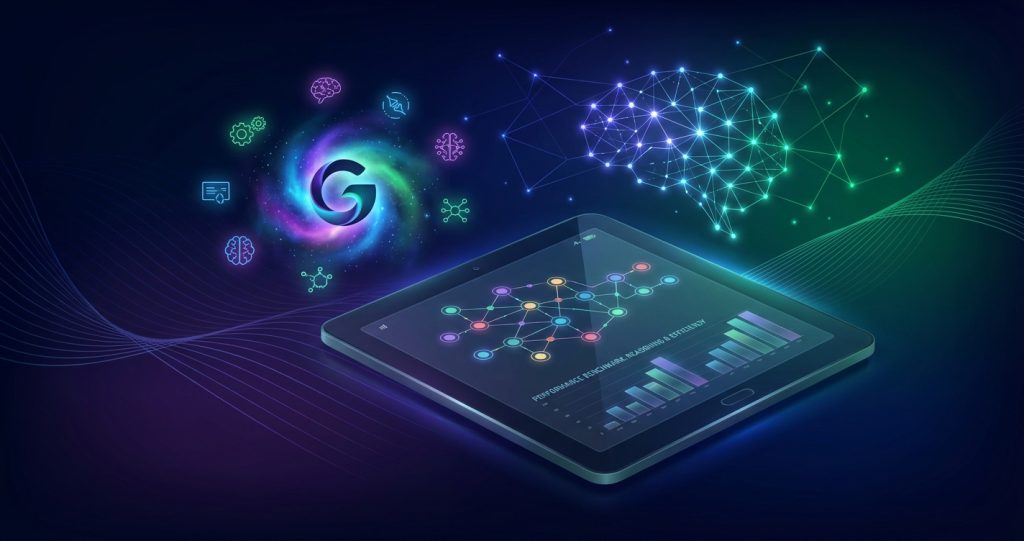
Bottom line up front: Gemini 3.1 Pro launched February 19, 2026 and immediately claimed the #1 spot on Artificial Analysis’ Intelligence Index across 115 models. With a 77.1% score on ARC-AGI-2 — more than double its predecessor — this is the biggest capability jump Google has shipped in a single model update. But it comes with a real trade-off: a 29-second time-to-first-token that will frustrate anyone expecting instant responses. Here’s the complete breakdown.
What Is Gemini 3.1 Pro?
Gemini 3.1 Pro is Google DeepMind’s latest large language model, released February 19, 2026. It is the updated “core intelligence” of the Gemini 3 series — the model that powers the Gemini app, NotebookLM, Vertex AI, and Google Antigravity.
Unlike Gemini 3 Deep Think, which targets specialized scientific research, Gemini 3.1 Pro is designed for everyday complex reasoning: writing, coding, analysis, data synthesis, and creative problem-solving. Think of it as the workhorse model that most users will actually interact with — just a dramatically smarter version than before.
The model is currently available in preview, with general availability expected soon. It is accessible through the Gemini app (for Google AI Pro and Ultra subscribers), Google AI Studio, Vertex AI, NotebookLM, Gemini CLI, Google Antigravity, and Android Studio.
Key stat: Gemini 3.1 Pro scores 77.1% on ARC-AGI-2 — a benchmark that tests the ability to solve completely novel logic problems never seen during training. Its predecessor, Gemini 3 Pro, scored approximately 35-38% on the same benchmark. That is more than a 100% improvement in core reasoning in three months.
Gemini 3.1 Pro vs. 3.0 Pro: What Actually Changed
Gemini 3 Pro launched in November 2025. Gemini 3.1 Pro arrived three months later. That is a fast iteration cycle — and the improvements are substantial.
| Feature | Gemini 3 Pro | Gemini 3.1 Pro |
|---|---|---|
| ARC-AGI-2 Score | ~35-38% | 77.1% |
| Intelligence Index (Artificial Analysis) | ~35 (estimated) | 57 (#1 / 115 models) |
| Output Speed | Not published | 105.8 tokens/sec |
| Time to First Token | Not published | 29.16 seconds |
| Context Window | 1M tokens | 1M tokens |
| Reasoning | Limited chain-of-thought | Full extended thinking |
| API Pricing (input) | $2.00 / 1M tokens | $2.00 / 1M tokens |
| API Pricing (output) | $12.00 / 1M tokens | $12.00 / 1M tokens |
| Availability | Generally available | Preview (GA coming soon) |
The API pricing is identical to 3.0 Pro, which is notable: you’re getting substantially better performance at the same cost. The context window remains 1 million tokens (roughly 1,500 A4 pages), a genuine competitive advantage for long-document workflows.
The major regression is latency: the extended thinking process that drives those benchmark gains adds significant wait time before the first token appears. For interactive chat, this is noticeable. For asynchronous workflows where accuracy matters more than speed, it’s acceptable.
Benchmark Performance: How Does It Stack Up?
Based on independent evaluation by Artificial Analysis (Intelligence Index v4.0), which measures reasoning, knowledge, mathematics, and coding across a standardized test suite:
| Metric | Gemini 3.1 Pro Preview | Peer Median (115 models) |
|---|---|---|
| Intelligence Index Score | 57 (Rank #1) | 26 |
| Output Speed | 105.8 tokens/sec (Rank #24) | 72.2 t/s |
| Time to First Token (TTFT) | 29.16 seconds | 1.20 seconds |
| Context Window | 1,000,000 tokens | — |
| ARC-AGI-2 | 77.1% | ~20-40% for frontier models |
The Intelligence Index score of 57 versus a peer median of 26 represents a 2x advantage over the average frontier model. The ARC-AGI-2 score deserves special attention: this benchmark is specifically designed to resist memorization. Models must solve genuinely novel logic patterns, which means a 77.1% score reflects actual reasoning ability rather than pattern-matching on training data.
The latency caveat is significant. A 29-second TTFT versus a peer median of 1.20 seconds means users will wait approximately 24x longer for the first word to appear compared to comparable models. Once generation begins, output speed is solid at 105.8 tokens/sec. But for conversational applications, that initial wait defines the experience.
Key Features of Gemini 3.1 Pro
1. Extended Thinking / Chain-of-Thought Reasoning
Gemini 3.1 Pro uses a reasoning-before-response architecture. Before generating an answer, the model works through the problem step by step. According to Google’s official announcement, this drives the major ARC-AGI-2 gains. The trade-off is the high TTFT — the model is thinking before it writes.
2. 1 Million Token Context Window
A 1M-token context window is equivalent to roughly 1,500 A4 pages, 5 full novels, or a large codebase. This makes Gemini 3.1 Pro practical for tasks impossible with shorter-context models: analyzing entire legal contracts, reviewing complete codebases, synthesizing research across dozens of papers, or maintaining coherent context across a very long project.
3. Multimodal Input (Text + Images)
Gemini 3.1 Pro accepts both text and image inputs. Based on Google’s documentation, this includes analyzing screenshots, diagrams, and visual data alongside text prompts. Output is text-only — image generation uses a separate model (Nano Banana Pro) within the Gemini ecosystem.
4. Creative and Agentic Coding
According to Google’s launch blog, Gemini 3.1 Pro can generate website-ready animated SVGs from text prompts, build live dashboards connected to real data streams, and create complex 3D visualizations with interactive controls. These capabilities require reasoning through design intent, technical constraints, and user experience simultaneously.
5. Deep Google Workspace Integration
Available through Gemini Enterprise, 3.1 Pro integrates directly with Google Workspace. For enterprises already on Google Cloud, this means the model can access and act on organizational data without requiring external API orchestration.
6. NotebookLM Integration
Gemini 3.1 Pro is now available in NotebookLM for Pro and Ultra subscribers, upgrading the intelligence layer of Google’s research and note-taking product. This is a meaningful update for researchers and analysts relying on NotebookLM for long-document synthesis.
7. Upcoming Apple Siri Integration
Apple announced a multi-year deal to use Gemini as the backend for next-generation Siri. According to Bloomberg, features are expected to roll out via iOS 26.4, with a broader overhaul planned for WWDC. Whether the initial iOS 26.4 version uses 3.1 Pro specifically has not been confirmed.
Real-World Use Cases: Where Gemini 3.1 Pro Excels
Complex Document Analysis
A 1M-token context window means you can feed an entire contract, a complete codebase, or a set of research papers and ask the model to synthesize, compare, or extract specific information. For legal teams, researchers, and financial analysts, this is the primary use case where context length matters day-to-day.
Multi-Step Reasoning Tasks
The extended thinking architecture makes 3.1 Pro particularly strong on problems requiring multiple constraints simultaneously: logic puzzles, math proofs, system design, compliance gap analysis. The 77.1% ARC-AGI-2 score is the quantitative evidence; the practical implication is fewer reasoning errors on complex logic chains.
Agentic Workflows
Google has explicitly positioned 3.1 Pro as the foundation for “ambitious agentic workflows” — tasks where an AI agent must plan, execute, and recover from errors over multiple steps. Access through Google Antigravity and Gemini CLI, combined with the highest intelligence ranking, makes it worth evaluating for production agent pipelines.
Creative Coding and Visualization
Google’s demonstration examples include building a live aerospace dashboard connected to real ISS telemetry data, generating animated SVGs from text descriptions, and creating interactive 3D simulations with generative audio. These require reasoning through design intent, technical constraints, and user experience together.
Research Synthesis in NotebookLM
For users of NotebookLM, the 3.1 Pro upgrade means substantially more accurate synthesis of complex source material. The model’s reasoning improvements translate directly into better answers when working with dense technical documents.
Pricing and How to Access Gemini 3.1 Pro
API Pricing (Developers and Enterprise)
Pricing is verified from Google’s official Vertex AI pricing page as of February 2026:
| Usage Type | Price |
|---|---|
| Input tokens (text, image, video, audio) — up to 200K | $2.00 / 1M tokens |
| Input tokens — over 200K | $4.00 / 1M tokens |
| Text output (response + reasoning tokens) | $12.00 / 1M tokens |
| Cached input tokens (up to 200K) | $0.20 / 1M tokens |
| Image output | $120 / 1M tokens |
Priority tier: For lower latency via dedicated capacity, pricing rises to $3.60/1M input and $21.60/1M output (up to 200K tokens).
Practical cost estimate: A typical complex analysis task involving a 50,000-token document and a 3,000-token response costs approximately $0.14 at standard pricing.
Consumer Access (Gemini App)
- Google AI Pro: $19.99/month. Access via gemini.google.com with limited daily 3.1 Pro messages.
- Google AI Ultra: Higher pricing. Expanded limits and priority access.
- Free tier: Very limited access — primarily for testing.
Google Cloud’s $300 free credit program via Vertex AI (90-day expiry) is the most cost-effective way for developers to evaluate the model for production use.
Where to Access
- Gemini App: gemini.google.com — select “Pro” mode
- Google AI Studio: aistudio.google.com (model string: gemini-3.1-pro-preview)
- Vertex AI: For enterprise Google Cloud customers
- NotebookLM: notebooklm.google.com (Pro and Ultra subscribers)
- Gemini CLI: geminicli.com
- Google Antigravity: antigravity.google
- Android Studio: For Android developers
Gemini 3.1 Pro: Honest Pros and Cons
What Works Well
- #1 benchmark position: Holds the top Intelligence Index ranking across 115 models per Artificial Analysis — an independent metric, not Google’s own benchmarks.
- 77.1% ARC-AGI-2: More than double the score of Gemini 3 Pro on a benchmark specifically designed to test genuine reasoning ability, not memorization.
- Same API price as 3.0 Pro: Getting significantly better performance at no additional cost is a genuine value proposition.
- 1M token context window: Few frontier models match this for long-document workflows.
- Broad platform availability: Available across consumer, developer, and enterprise surfaces from day one.
- NotebookLM integration: Upgrading one of Google’s most practically useful AI products with better reasoning.
Real Drawbacks
- 29-second time-to-first-token: 24x slower than the peer median. For interactive chat, users will notice a significant wait. This is inherent to extended reasoning.
- Preview status: Not generally available yet. Rate limits, pricing, and stability may change before GA.
- Text output only: Image generation requires a separate model (Nano Banana Pro) and a separate API call.
- Output cost higher than mid-tier competitors: At $12.00/1M output tokens, more expensive than Gemini 3 Flash ($3.00/1M) for high-volume use cases.
- Google AI Pro subscription required for app access: Free tier is very limited; meaningful usage requires $19.99/month.
- No real-time information by default: Training cutoff applies; real-time web access requires Google Search grounding (adds cost).
Who Should Use Gemini 3.1 Pro?
Best Fit
- Researchers and analysts: The combination of 1M context, top-tier reasoning, and NotebookLM integration makes this the strongest available tool for synthesizing large volumes of source material accurately.
- Enterprise teams on Google Cloud: Vertex AI integration makes adoption frictionless for existing GCP customers. Reasoning improvements translate directly into better accuracy on complex business workflows.
- Developers building agentic applications: Google has explicitly positioned 3.1 Pro for multi-step, autonomous workflows. Access through Antigravity and Gemini CLI, combined with the highest intelligence ranking, makes it worth evaluating for production agent pipelines.
- Power users on Google Workspace: Deep Gemini Enterprise and Workspace integration creates a strongly integrated productivity environment.
Consider Alternatives If:
- Latency is critical: The 29-second TTFT is a real constraint for chat interfaces or user-facing applications. See our ChatGPT Alternatives guide for faster options.
- Cost-sensitive, high-volume use: Gemini 3 Flash or DeepSeek V3 deliver strong performance at a fraction of the cost.
- You primarily need coding assistance: Dedicated tools like Claude Code or OpenAI Codex are optimized for coding workflows.
How Gemini 3.1 Pro Compares to Alternatives
For a comprehensive breakdown of pricing across all major AI models, see our AI Tools Pricing Comparison 2026.
Gemini 3.1 Pro vs. Claude Opus 4.6
Claude Opus 4.6 (see our Claude Code review for context) is Anthropic’s flagship reasoning model. Gemini 3.1 Pro holds the #1 Intelligence Index ranking, though Anthropic does not publish ARC-AGI-2 scores for Opus 4.6. Both are top-tier reasoning models. Opus 4.6 tends to feel faster in interactive use; Gemini 3.1 Pro’s 1M token context window advantage is meaningful for long-document tasks.
Gemini 3.1 Pro vs. GPT-5.2
OpenAI’s GPT-5.2 is a strong competitor. Gemini 3.1 Pro holds the top Intelligence Index position as of this review, but rankings shift as models update. GPT-5.2 has substantially lower TTFT latency, making it better for interactive applications. Gemini’s context window and Google ecosystem integration are its differentiators.
Gemini 3.1 Pro vs. DeepSeek V3
DeepSeek V3 is an open-source model highly competitive on benchmarks at a fraction of the cost. For developers needing flexibility, self-hosting capability, and cost efficiency, DeepSeek V3 remains a strong budget alternative. Gemini 3.1 Pro is meaningfully better on the Intelligence Index but costs more per token.
Gemini 3.1 Pro vs. Gemini 3 Flash
Gemini 3 Flash ($0.50/1M input, $3.00/1M output) provides excellent cost-performance for most use cases that don’t require maximum reasoning performance. 3.1 Pro is for tasks where reasoning quality is the bottleneck, not token cost.
Gemini 3.1 Pro vs. OpenAI Deep Research
OpenAI Deep Research is a workflow product — it combines web search with multi-step research synthesis. If your primary need is real-time research with citations, Deep Research has a more polished end-to-end workflow. Gemini 3.1 Pro is the better underlying model for raw reasoning on documents you already have.
Verdict: Is Gemini 3.1 Pro Worth Using?
Yes — with clear caveats about who it’s actually right for.
The reasoning improvement from Gemini 3.0 Pro to 3.1 Pro is genuinely significant, not incremental marketing. Doubling the ARC-AGI-2 score in three months while maintaining identical API pricing is a meaningful advance. The #1 Intelligence Index ranking among 115 models is independent validation, not Google’s own benchmarks.
The latency problem is real. Twenty-nine seconds to first token is not a minor complaint — it will define the experience in any interactive context. This isn’t a deal-breaker for document analysis, agentic workflows, or asynchronous pipelines, but it is a genuine constraint for chat-first applications.
The model is also still in preview. Pricing, rate limits, and availability will likely change before general availability. Production deployments should plan accordingly.
For researchers, analysts, enterprise Google Cloud users, and developers building reasoning-heavy agentic systems: Gemini 3.1 Pro is the most capable model currently available based on independent benchmarks, at the same price as Gemini 3 Pro. That is a compelling upgrade.
For casual users, chat-first applications, or anyone primarily using AI for quick Q&A: the latency and subscription requirement make other options more practical right now.
Gemini 3.1 Pro — Our Rating
- Reasoning Quality: 9.5/10 — #1 ranked, 77.1% ARC-AGI-2
- Speed/Latency: 5/10 — 29-second TTFT is a real friction point
- Context Window: 9/10 — 1M tokens, best-in-class for consumer/developer access
- Pricing: 7/10 — Same as 3.0 Pro at API level; Pro subscription needed for app access
- Platform Integration: 9/10 — Deep Google ecosystem integration is a genuine advantage
- Overall: 8/10
Gemini 3.1 Pro FAQ
When was Gemini 3.1 Pro released?
Gemini 3.1 Pro was released in preview on February 19, 2026. Google has confirmed general availability is coming soon but has not given a specific date.
Is Gemini 3.1 Pro free?
Very limited free access is available through gemini.google.com and Google AI Studio. Meaningful usage requires either a Google AI Pro subscription ($19.99/month) for the consumer app, or API access through Vertex AI (Google offers $300 in free credits for new Google Cloud accounts, valid 90 days).
What is the difference between Gemini 3.1 Pro and Gemini 3 Deep Think?
Gemini 3 Deep Think is Google’s specialized model for scientific and engineering research — higher accuracy on STEM benchmarks but designed for narrow expert use cases. Gemini 3.1 Pro is the general-purpose model for broad consumer, developer, and enterprise applications. Deep Think is the specialized tool; 3.1 Pro is the everyday workhorse.
Why is Gemini 3.1 Pro slow to respond?
The 29-second time-to-first-token is a direct consequence of the extended thinking architecture. Before generating a response, the model works through a reasoning chain internally. This “thinking time” drives the benchmark improvements but adds latency. Once generation begins, output speed is solid at 105.8 tokens/sec. If latency is a priority, Gemini 3 Flash or Gemini 3.0 Pro will feel significantly faster.
Can I use Gemini 3.1 Pro for coding?
Yes. According to Google’s documentation, 3.1 Pro excels at reasoning-intensive coding tasks — complex system design, building interactive visualizations, configuring live data integrations. For line-level code completion and IDE integration, dedicated AI coding assistants are optimized for developer workflows. Gemini 3.1 Pro is better suited to architectural-level challenges where reasoning depth matters more than typing speed.
Will Gemini 3.1 Pro power Apple Siri?
Apple has a confirmed multi-year deal to use Gemini as the backend for next-generation Siri. According to Bloomberg, Gemini-powered Siri features are expected in iOS 26.4. Whether the initial rollout uses Gemini 3.1 Pro specifically has not been confirmed. More comprehensive Siri changes are expected at WWDC 2026.
How does Gemini 3.1 Pro compare to ChatGPT?
Gemini 3.1 Pro holds the top Intelligence Index position across 115 models per Artificial Analysis, placing it above GPT-5.2 on composite reasoning benchmarks. Practically, ChatGPT (GPT-5.x) remains faster and more familiar for general users. Gemini 3.1 Pro’s advantages are in long-context tasks (1M token window), reasoning-heavy workflows, and Google ecosystem integration. Our ChatGPT Alternatives guide covers the full comparison.
Frequently Asked Questions
What makes Gemini 3.1 Pro different from its predecessor?
Gemini 3.1 Pro shows significant improvements over Gemini 3 Pro, particularly in its ARC-AGI-2 score, which jumped from approximately 35-38% to 77.1%. This enhancement indicates a more than 100% improvement in core reasoning capabilities in just three months.
How does the performance of Gemini 3.1 Pro stack up in benchmarks?
In benchmark tests, Gemini 3.1 Pro achieved a score of 77.1% on ARC-AGI-2, which measures the ability to solve novel logic problems. This score is the highest among 115 models, showcasing its advanced capabilities in artificial intelligence.
What are the key features of Gemini 3.1 Pro?
Gemini 3.1 Pro is designed for complex reasoning tasks such as writing, coding, analysis, and data synthesis. It serves as the core intelligence for various applications, including the Gemini app, NotebookLM, and Vertex AI, making it versatile for everyday use.
When was Gemini 3.1 Pro released?
Gemini 3.1 Pro was officially launched on February 19, 2026. It quickly gained recognition as the top model in the Artificial Analysis Intelligence Index.
What are the potential downsides of using Gemini 3.1 Pro?
One notable downside of Gemini 3.1 Pro is its 29-second time-to-first-token, which may frustrate users expecting instant responses. This trade-off comes with the model’s enhanced capabilities.
Who is the target audience for Gemini 3.1 Pro?
Gemini 3.1 Pro is aimed at users who require advanced reasoning and problem-solving capabilities, making it suitable for professionals in writing, coding, and data analysis. It’s designed to be the go-to model for everyday complex tasks.
Where can I access Gemini 3.1 Pro?
Gemini 3.1 Pro is currently available in preview and can be accessed through platforms such as the Gemini app, Google AI Studio, Vertex AI, and NotebookLM, among others. General availability is expected soon.