Forty-three AI writing tools launched in the past six months, each claiming to be the “best” for content creation. Your team needs to pick one (maybe two), but every comparison review contradicts the last, and free trials barely scratch the surface of real-world use cases.
Choosing the right AI writing tool in 2026 isn’t about finding the “best” one—it’s about finding the right one for your specific needs, budget, and workflow. With dozens of options flooding the market, from free chatbots to $500/month enterprise platforms, making the wrong choice can cost you thousands in wasted subscriptions and hours in frustration.
This buyer’s guide cuts through the marketing hype. We’ll cover exactly what features matter, which ones are overrated, how to evaluate tools properly, and red flags that should send you running. By the end, you’ll know exactly what to look for—and what to avoid—when investing in AI writing software.
Table of Contents
- The 2026 AI Writing Landscape
- Types of AI Writing Tools
- Essential Features to Evaluate
- The Evaluation Framework
- Pricing Models Explained
- Who Needs What: Buyer Profiles
- Red Flags to Watch For
- Integration Considerations
- Testing Protocol: How to Trial AI Tools
- Security and Compliance
- ROI Calculation Framework
- Future-Proofing Your Choice
- FAQs
- Final Recommendations
The 2026 AI Writing Landscape
The AI writing market has matured dramatically. What started as glorified autocomplete has evolved into sophisticated content generation systems powered by large language models (LLMs) like GPT-4, Claude 3.5, Gemini 2.0, and proprietary fine-tuned models.
Key Market Shifts in 2026
From Speed to Performance: Early AI writing tools competed on how fast they could generate content. In 2026, the focus has shifted to content that actually performs—meaning it ranks in search engines, resonates with audiences, and drives conversions.
AI + SEO Integration: Standalone AI writers are being replaced by integrated platforms that combine content generation with SEO optimization, keyword research, and content scoring.
Answer Engine Optimization (AEO): With AI-powered search (Google AI Overviews, Perplexity, etc.) changing how content is discovered, tools that optimize for AEO—not just traditional SEO—are gaining ground.
Enterprise-Grade Governance: Organizations now demand brand voice controls, compliance features, and audit trails. Consumer-grade “anything goes” AI tools are being phased out of professional workflows.
The Current Tool Ecosystem
| Category | Examples | Price Range |
|---|---|---|
| General Purpose AI | ChatGPT, Claude, Gemini | Free–$20/mo |
| AI Writing Assistants | Jasper, Copy.ai, Writesonic | $39–$125/mo |
| SEO Content Platforms | Surfer SEO, Frase, NeuronWriter | $29–$199/mo |
| Enterprise Solutions | Writer, Conductor, Contentful AI | $500–$5,000+/mo |
| Specialized Tools | Rytr, QuillBot, Grammarly | Free–$60/mo |
Types of AI Writing Tools
Before evaluating individual products, understand the different categories:
1. General-Purpose LLM Interfaces
What they are: Direct access to foundation models (GPT-4, Claude, Gemini) through chat interfaces or APIs.
Best for: Versatile users who want maximum flexibility and don’t need templates or workflows.
Limitations: No specialized workflows, minimal SEO guidance, requires prompt engineering skills.
Examples: ChatGPT Plus ($20/mo), Claude Pro ($20/mo), Gemini Advanced ($20/mo)
2. AI Writing Assistants (Content Generation Focus)
What they are: Platforms that wrap LLMs with templates, workflows, and UI designed for content creation.
Best for: Marketing teams, content creators, and businesses that need guided content generation with templates.
Limitations: Often lack deep SEO integration; quality varies by template.
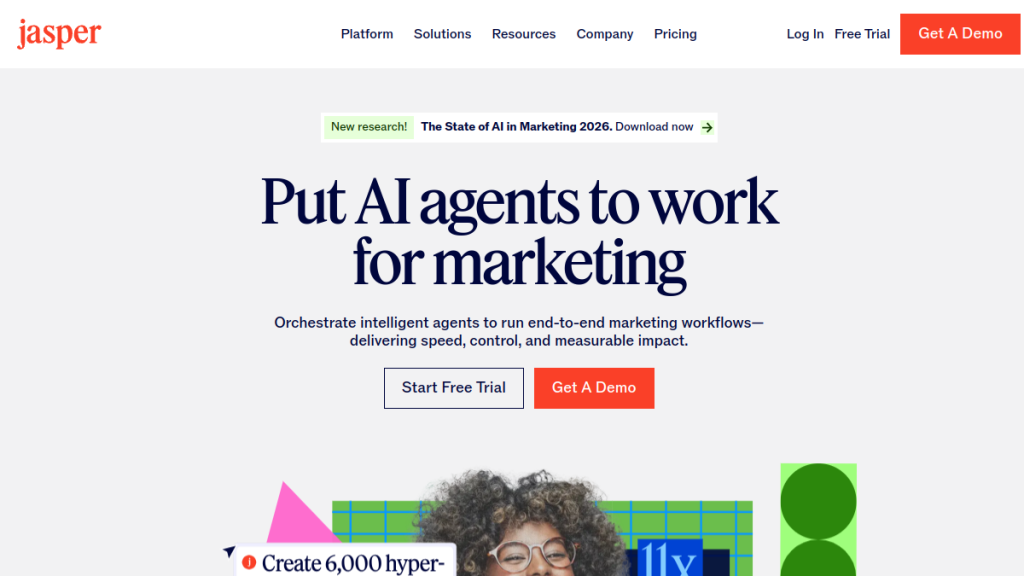
Examples: Jasper.ai” rel=”nofollow” target=”_blank”>Jasper ($49/mo), Copy.ai ($49/mo), Writesonic ($20/mo)
3. SEO Content Optimization Platforms
What they are: Tools that combine AI writing with real-time SEO analysis, keyword optimization, and competitive insights.
Best for: SEO-focused content teams, bloggers, and agencies prioritizing search visibility.
Limitations: May have smaller template libraries; learning curve for SEO beginners.
Examples: Surfer SEO ($89/mo), Frase ($45/mo), NeuronWriter ($23/mo), Clearscope ($170/mo)
4. Enterprise Writing Platforms
What they are: Full-scale content operations platforms with governance, brand voice controls, compliance features, and team workflows.
Best for: Large organizations with brand guidelines, compliance requirements, and multiple content teams.
Limitations: Expensive; often require implementation and training.
Examples: Writer (custom pricing), Conductor (enterprise), Acrolinx (enterprise)
5. Specialized AI Tools
What they are: Tools focused on specific content types or functions—grammar checking, paraphrasing, specific formats.
Best for: Users with specific needs who don’t require full content generation.
Limitations: Narrow functionality; often need to be combined with other tools.
Examples: Grammarly (grammar/style), QuillBot (paraphrasing), Hemingway (readability), Rytr (short-form)
Essential Features to Evaluate
Not all features matter equally. Here’s a priority-ranked breakdown:
Tier 1: Must-Have Features
1. Output Quality & Accuracy
- Factual accuracy (does it hallucinate?)
- Logical coherence
- Natural language flow
- Ability to handle industry-specific terminology
How to test: Give it your industry-specific content. Does it understand nuances, or produce generic fluff?
2. Customization & Brand Voice
- Train or fine-tune on your content
- Style guide enforcement
- Tone adjustment controls
- Custom knowledge bases
Why it matters: Generic AI output is easy to spot. Your content needs to sound like you.
3. SEO Integration
- Keyword research or integration
- Content scoring against search intent
- SERP analysis
- Internal linking suggestions
Why it matters: Content that doesn’t rank doesn’t matter. 93% of online experiences begin with search.
4. Usability & Workflow
- Intuitive interface
- Template quality and variety
- Export options
- Collaboration features
Why it matters: A powerful tool you can’t figure out is worthless.
Tier 2: Important Features
5. Content Types Supported
- Long-form articles
- Short-form copy (ads, social)
- Email sequences
- Landing pages
- Product descriptions
6. Plagiarism & AI Detection
- Built-in plagiarism checker
- AI detection scores
- Humanization features
Why it matters: Publishing plagiarized or obviously AI-generated content can destroy credibility and trigger Google penalties.
7. Integration Capabilities
- CMS integrations (WordPress, Webflow)
- SEO tool connections
- Marketing platform sync
- API access
8. Multi-language Support
- Number of languages supported
- Quality of non-English output
- Translation accuracy
Tier 3: Nice-to-Have Features
9. Team & Collaboration
- Multi-user access
- Role permissions
- Approval workflows
- Version history
10. Analytics & Reporting
- Usage tracking
- ROI measurement
- Content performance insights
11. Advanced AI Features
- Chat mode for research
- Image generation
- Voice cloning
- Video script formatting
The Evaluation Framework
Use this systematic approach to evaluate any AI writing tool:
Step 1: Define Your Primary Use Case
Before anything else, answer these questions:
- What content type do you create most? (Blog posts, ad copy, emails, documentation)
- What’s your volume? (5 pieces/month vs. 50/day)
- Who will use it? (Solo user vs. team of 20)
- What’s your SEO priority? (Critical vs. nice-to-have)
- What’s your budget? (Be honest—include hidden costs)
Step 2: The Real-World Test Protocol
Don’t rely on demo content. Test with YOUR content:
Test 1: Mirror Test
Take your best-performing existing content. Ask the AI to create something similar on the same topic. Compare quality, accuracy, and voice alignment.
Test 2: Industry Knowledge Test
Ask it to write about a nuanced topic in your industry. Does it understand the subtleties, or produce surface-level generalities?
Test 3: Instruction Following Test
Give it specific, detailed instructions with constraints. Does it follow them, or ignore half your requirements?
Test 4: Editing Workflow Test
Generate content and edit it. How much revision does it need? If you’re rewriting 80%, you’re not saving time.
Test 5: Long-Form Coherence Test
Generate a 2,000+ word article. Does it maintain logical flow, or become repetitive and disjointed?
Step 3: Scoring Matrix
Rate each tool you test on this scale (1-5):
| Criteria | Weight | Score | Weighted Score |
|---|---|---|---|
| Output Quality | 25% | ||
| Brand Voice Match | 20% | ||
| SEO Capabilities | 20% | ||
| Ease of Use | 15% | ||
| Value for Price | 10% | ||
| Integration Options | 5% | ||
| Support Quality | 5% | ||
| Total | 100% | — |
Pricing Models Explained
AI writing tool pricing is confusing by design. Here’s how to decode it:
Common Pricing Models
1. Credit-Based (Per Word/Request)
- You buy credits; each generation costs credits
- Examples: Jasper, Writesonic, Rytr
- Watch out for: Credit depletion mid-project; hidden credit costs for certain features
2. Seat-Based (Per User)
- Pay per team member with access
- Examples: Copy.ai Teams, Writer
- Watch out for: Costs multiplying as teams grow; “viewer” seats that cost as much as full users
3. Usage-Based (Output Volume)
- Pay based on words generated or documents created
- Examples: Some enterprise tiers
- Watch out for: Unpredictable bills; production spikes causing cost overruns
4. Flat-Rate (Unlimited)
- Fixed monthly fee for unlimited use
- Examples: Surfer SEO, some Copy.ai plans
- Watch out for: “Unlimited” often has fair-use policies; premium features still cost extra
True Cost Calculation
Add these hidden costs to your evaluation:
| Cost Type | Consider |
|---|---|
| Base subscription | Monthly fee × 12 |
| Additional seats | If team grows |
| Premium features | Often gated behind higher tiers |
| Overages | For credit-based models |
| Training time | Hours to learn × hourly rate |
| Integration costs | Developer time, add-on fees |
| Annual commitment | Discounts often require annual payment |
Example Calculation:
- Base plan: $99/mo × 12 = $1,188/year
- 2 additional seats: $49/mo × 2 × 12 = $1,176/year
- Premium SEO add-on: $49/mo × 12 = $588/year
- Training (10 hours × $50/hr): $500
- True Year 1 Cost: $3,452
Who Needs What: Buyer Profiles
Profile 1: Solo Blogger / Content Creator
Budget: $20–$100/month
Skip: Team features, enterprise governance
Best Options:
- Budget: ChatGPT Plus + Surfer SEO Basic
- Mid-tier: Jasper Creator or Frase
- Premium: Surfer AI Writer
Recommendation: Start with ChatGPT for drafting, add a dedicated SEO tool if you’re serious about search traffic.
Profile 2: Freelance Writer / Copywriter
Budget: $50–$200/month
Skip: Multi-user features, compliance tools
Best Options:
- Copy.ai (short-form variety)
- Jasper (long-form + templates)
- Writesonic (budget-friendly)
Recommendation: Choose based on your primary deliverable. Long-form = Jasper or Surfer. Short-form = Copy.ai.
Profile 3: Marketing Team (5-20 people)
Budget: $200–$1,000/month
Skip: Over-engineered enterprise features you won’t use
Best Options:
- Copy.ai Teams
- Jasper Business
- Writer (if brand governance is critical)
Recommendation: Pilot with 2-3 users before team-wide rollout. Measure actual time savings.
Profile 4: Agency (Client Work)
Budget: $300–$2,000/month
Skip: Single-brand restrictions
Best Options:
- Jasper Agency
- Scalenut Agency
- Surfer SEO Business
Recommendation: Ensure you can create separate workspaces per client. Volume pricing matters—negotiate.
Profile 5: Enterprise (100+ employees)
Budget: $2,000–$50,000+/month
Skip: Consumer-grade tools without enterprise features
Best Options:
- Writer
- Conductor
- Acrolinx
- Custom LLM implementations
Recommendation: Require proof of compliance with your industry regulations. Get IT and Legal involved early.
Red Flags to Watch For
Immediate Deal-Breakers
🚩 No Free Trial or Demo
If they won’t let you test the product, they know it won’t impress you.
🚩 Vague Pricing
“Contact us for pricing” on a $100/month tool is hiding something. Legitimate enterprise tools do this; mid-market tools shouldn’t.
🚩 No Cancellation Transparency
Check the cancellation policy before signing up. Some lock you into annual contracts with no refunds.
🚩 Outdated Model Information
If they can’t tell you which LLM powers their tool, or they’re still bragging about GPT-3.5 in 2026, they’re behind.
🚩 100% Originality Claims
No AI tool produces truly unique content—they’re trained on existing data. Anyone claiming otherwise is lying.
Yellow Flags (Proceed with Caution)
⚠️ Heavy Focus on Word Count
“Generate 10,000 words per month!” Quality matters more than volume.
⚠️ Aggressive Upselling
If the free trial constantly pushes you toward the enterprise plan, expect constant upgrade pressure.
⚠️ Feature Bloat
50+ templates you’ll never use means they’re padding value instead of perfecting core features.
⚠️ No Human Support
Chatbot-only support for paid products is unacceptable in 2026.
Integration Considerations
Your AI writing tool shouldn’t exist in isolation. Evaluate these integrations:
Essential Integrations
| Integration Type | Why It Matters |
|---|---|
| CMS (WordPress, Webflow, Shopify) | Direct publishing saves time |
| SEO Tools (Ahrefs, SEMrush, GSC) | Keyword data where you write |
| Google Docs | Collaboration and editing workflows |
| Project Management (Notion, Asana) | Content calendars and assignments |
Integration Questions to Ask
- Are integrations included or paid add-ons?
- Is it native integration or third-party (Zapier)?
- What’s the setup complexity?
- Does it support two-way sync?
- Are there API rate limits?
API Considerations
If you need API access for custom workflows:
- Rate limits: How many requests per minute/hour?
- Pricing: Is API use metered separately?
- Documentation: Is the API well-documented?
- Support: Is there developer support available?
Testing Protocol: How to Trial AI Tools
The 14-Day Test Plan
Days 1-3: Learning Phase
- Complete onboarding/tutorials
- Explore all features
- Generate sample content across categories
- Note: What’s intuitive? What’s confusing?
Days 4-7: Real Work Phase
- Use it for actual projects
- Generate content you’ll publish
- Track time spent (writing + editing)
- Note: Time savings? Quality concerns?
Days 8-10: Edge Case Testing
- Test features you’ll rarely use
- Try complex, multi-part content
- Test collaboration features (if applicable)
- Note: Does it handle everything, or just common cases?
Days 11-14: Comparison Phase
- Compare outputs to your current process
- Calculate actual ROI
- Test support responsiveness
- Make go/no-go decision
Trial Checklist
Before trial ends, verify:
- [ ] Generated at least 10 pieces of content
- [ ] Used on actual (not test) projects
- [ ] Tested primary use case thoroughly
- [ ] Contacted support with a question
- [ ] Understood all pricing tiers
- [ ] Checked cancellation/refund policy
- [ ] Compared to at least one alternative
Security and Compliance
Data Handling Questions
Ask every vendor:
- Data retention: How long is my content stored?
- Training use: Is my content used to train AI models?
- Data location: Where are servers physically located?
- Encryption: Is data encrypted at rest and in transit?
- Access controls: Who at the vendor can see my content?
Compliance Certifications
Look for (based on your industry):
| Certification | Relevant For |
|---|---|
| SOC 2 Type II | General business data security |
| GDPR compliance | EU data handling |
| HIPAA | Healthcare content |
| FedRAMP | Government use |
| ISO 27001 | Information security management |
Content Ownership
Verify in writing:
- Do you own content generated through the platform?
- Can you use it commercially without restriction?
- Are there any usage limitations?
ROI Calculation Framework
Time Savings Calculation
Step 1: Measure Current Process
- Average time to write [content type]: _____ hours
- Average pieces per month: _____
- Total monthly writing hours: _____
Step 2: Estimate AI-Assisted Process
- Time with AI (including editing): _____ hours
- Time saved per piece: _____ hours
- Total monthly time saved: _____ hours
Step 3: Calculate Value
- Your hourly rate (or writer cost): $_____/hour
- Monthly time savings value: $_____
- Annual time savings value: $_____
Step 4: Compare to Tool Cost
- Annual tool cost: $_____
- Net annual savings: $_____
- ROI: _____%
Quality Impact Calculation
Harder to measure, but consider:
- Improved content performance (traffic, conversions)
- Reduced revision cycles
- Faster time-to-publish
- Consistency across content pieces
Example ROI Calculation
| Metric | Value |
|---|---|
| Current time per blog post | 4 hours |
| AI-assisted time per post | 1.5 hours |
| Time saved per post | 2.5 hours |
| Posts per month | 12 |
| Monthly time saved | 30 hours |
| Effective hourly rate | $75 |
| Monthly value of time saved | $2,250 |
| Annual value of time saved | $27,000 |
| Annual tool cost | $1,200 |
| Net Annual Savings | $25,800 |
| ROI | 2,150% |
Future-Proofing Your Choice
Trends to Watch
1. AI-Search Integration
Tools that optimize for AI Overviews and answer engines (AEO) will outperform SEO-only solutions.
2. Multimodal Capabilities
Text + image + video generation in single platforms is becoming standard.
3. Custom Model Training
Fine-tuning on your content/voice will separate premium tools from commodity ones.
4. Real-Time Data Integration
AI that pulls current data (prices, stats, news) will produce more accurate content.
5. Regulatory Scrutiny
AI content disclosure requirements may change how we publish and label AI-assisted content.
Future-Proof Checklist
Choose tools that:
- [ ] Update underlying models regularly
- [ ] Add AEO/answer engine features
- [ ] Offer custom training options
- [ ] Have a clear product roadmap
- [ ] Show consistent innovation (check release notes)
- [ ] Have financial stability (funded or profitable)
FAQs
Q: Can Google tell if content is AI-generated?
A: Google has stated it doesn’t penalize AI content specifically—it penalizes low-quality content regardless of how it’s made. However, AI detection is improving. The bigger risk is producing generic, unhelpful content that won’t rank regardless of origin. Focus on adding unique value, expert insights, and editing AI output thoroughly.
Q: How much should I budget for AI writing tools?
A: Realistic budgets by user type:
- Solo creators: $50–$150/month
- Small teams: $200–$500/month
- Agencies: $500–$2,000/month
- Enterprise: $2,000+/month
Q: Should I use multiple AI writing tools?
A: Potentially, yes. Many professionals use a combination:
- A general LLM (ChatGPT/Claude) for research and brainstorming
- A specialized writing tool for content generation
- An SEO platform for optimization
However, avoid “tool creep”—adding tools without clear purpose.
Q: What’s the learning curve for most tools?
A: Most modern AI writing tools can be used productively within 1-2 hours. However, mastering prompt engineering and advanced features typically takes 1-2 weeks of regular use. Budget training time accordingly.
Q: How do I handle AI-generated content disclosure?
A: This varies by:
- Platform: Some require disclosure (LinkedIn policies)
- Industry: Regulated industries may have requirements
- Ethics: Many publications require disclosure
Current best practice: Disclose AI assistance when publishing for clients or on platforms requiring it. Maintain records of AI-assisted content internally.
Q: Will AI writing tools replace human writers?
A: No—but they will replace writers who don’t use AI. The role is evolving from “content creator” to “content director”—guiding AI, editing output, adding expertise, and ensuring quality. Human judgment, expertise, and oversight remain essential.
Q: What’s the best free AI writing tool?
A: For free options:
- ChatGPT (free tier): Best overall capability with usage limits
- Claude.ai (free tier): Excellent for long-form with usage limits
- Google Gemini (free): Good integration with Google ecosystem
- Rytr (free tier): Limited but useful for short content
Note: Free tiers always have significant limitations. See our best free AI writing tools guide for detailed comparisons. If AI writing is core to your work, budget for paid tools.
Final Recommendations
The Decision Tree
Start here: What’s your PRIMARY content type?
Long-form content (blogs, articles, guides)
→ Prioritize: SEO integration, long-form coherence, research capabilities
→ Top picks: Surfer SEO, Frase, Jasper
Short-form content (ads, social, emails)
→ Prioritize: Template variety, speed, tone flexibility
→ Top picks: Copy.ai, Writesonic, Jasper
Technical/specialized content
→ Prioritize: Custom training, accuracy, terminology handling
→ Top picks: Writer, ChatGPT/Claude with custom prompts
High-volume agency work
→ Prioritize: Multi-brand support, team features, scalability
→ Top picks: Jasper Business, Scalenut, Copy.ai Teams
Enterprise compliance-critical
→ Prioritize: Governance, audit trails, security certifications
→ Top picks: Writer, Conductor, custom enterprise solutions
Quick-Start Recommendation by Budget
| Budget | Best Value Options |
|---|---|
| Free | ChatGPT + Hemingway App |
| $0–$50/mo | Writesonic or Rytr + free SEO tools |
| $50–$150/mo | Jasper Creator OR Surfer SEO |
| $150–$300/mo | Jasper + Surfer (combo) |
| $300+/mo | Full-stack: Jasper Teams + Surfer + SEMrush |
Final Advice
- Trial before you buy—always
- Test with YOUR content—demos lie
- Start smaller—you can upgrade later
- Measure actual ROI—not theoretical benefits
- Stay adaptable—the market is evolving fast
The right AI writing tool can transform your content production. The wrong one is an expensive distraction. Use this guide to choose wisely.